



Steel Cord Conveyor Belt
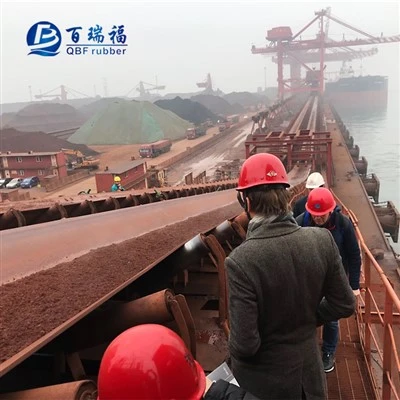
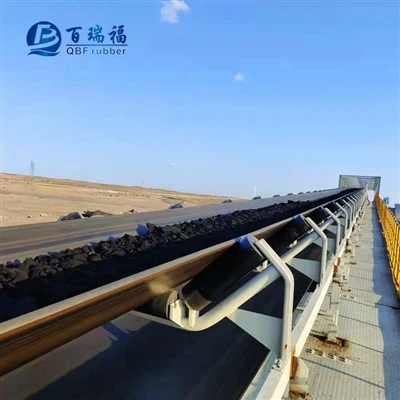
Steel cord conveyor belts are highly wear-resistant and used principally for long-haul conveying, heavy loads and physically demanding applications. They are especially suitable for high-mass or high-volume flows and for abrasive materials.





What are Advantages of Steel Cord Conveyor Belt?
High Strength
When the belt operating tension has to be higher than 2500 KN/m, belts reinforced with steel cord are the only alternative; and there are steel cord belts designed for ratings up to 10000 KN/m. Steel cord belts are also an economic alternative to fabric belts with ratings between 1000 KN/m and 2500 KN/m.
Lower Factor of Safety
Fabric belts are designed with a factor of safety of 10, but the factor of safety is only 6.67 for steel cord belts. This means that a fabric belt can be replaced with a steel cord belt of a smaller rating, which provides a lifetime savings to the operator.
Shorter Takeups
the elongation of a material depends on its elastic modulus; and the superior elastic modulus of steel cord; elongation can be less than 0.25%; which allows for smaller takeup lengths.
Long Centre Distances
Steel cable has much lower elongation than fabrics, and this, in addition to the strength, lets belts be designed with long distances between pulleys; and takeups and transfer points are less constraining.
Smaller Pulley Diameters
With a much thinner carcass than a fabric belt of the equivalent rating, steel cord belts can be run on pulleys with smaller diameters, which leads to energy savings. The superior dynamic modulus of steel over fabric means that fatigue is much less.
High Impact Resistance
Typically, steel cord belt design leads to a greater proportion of rubber in the whole belt compared to textile conveyor belts. Additional rubber means that impact energy is better absorbed by the belt; making steel cord belts a good choice for any application where there can be sudden heavy individual pieces.
Excellent Troughability
Even the highest rated steel cord belts trough perfectly on deep troughed idler sites. This ensures easy belt training, and gives the belt a larger effective capacity; allowing the user to either increase throughput, or use a narrower belt.
Long Life Expectancy
Steel cord belts can be supplied with a thinner carcass and thicker cover rubber for the same rating as an equivalent fabric belt; which increases the belt life. The carcass also has a greater life than an equivalent fabric carcass.
Splice Life and Strength
Properly provided belt splices can last as long as the Belt itself. They can also achieve spliced strength equivalent to almost 100% of the strength of the Belt.
Easy Reconditioning
Steel cord belts can be repaired with hot or cold vulcanization and the damaged edges can be restored to their original width by hot repair. Worn out covers can be replaced with fresh rubber, durable enough to completely rejuvenate the belt, delivering even greater economy for the customer.
Reinforcement Properties
Made of high-tensile steel cords and various cover grades. A typical carcass with 7 x 7 hot-galvanised steel cords provides a tensile strength of up to 2,000 N/mm. Also available as 7 x 19 for higher tensile strength (10 000 N/mm).
Standard cords have an elongation of 0.22 - 0.28%. High structural strength and pull-out strength ensure good resistance against fatigue. The open cross-lay design of the cords and the chemical adhesive system ensure that the core rubber penetrates thoroughly, bonds well and protects against corrosion for long-term integrity.
Cover Grades
The belts come with various cover grades, all made of high-quality rubber with extremely high resistance to abrasion, cutting and impact and with excellent ageing properties. The choice of cover grade will depend on the application and will also determine the working life of the belt. Matching the right belt to your application means generating less waste in the long run — helping you to reach your sustainability targets.
Wear-Resistant
Available in X, Y, W grades (and similar) for heavy-wear conveying applications such as bulky, sharp materials like heavy, abrasive rocks. High-quality cover grades are recommended to offer the best protection to the belt carcass.
Heat-Resistant
Different types of grades are available for high-temperature applications (T120 and T200) such as clinker, coke, foundry sand and slag. Can be used for transporting material at continuous temperatures of up to 190 °C, with peaks of up to 200 °C.
Flame-Resistant
Available in flame-resistant grade K to comply with ISO 340. Can be used in tunnel projects but not underground applications.
Types of Steel Cord Conveyor Belt
Energy Saving Belt
Which extends the advantages of conveyor belts, allowing reduced power consumption and reduced operational cost of the conveyors with innovative and highly engineered cover compound technology.
Heat Resistant Belt
For decades, plants like yours have been forced to cope with belts that quickly crack and blister resulting premature failure, splice failure and carry-back, finally, a new breed of belt is changing all that. QBF breakthroughs in heat tolerance, abrasion resistance and splice adhesion properties have been industry-proven throughout the world in cement plants, lime kilns, potash, foundries, coke oven plants, iron ore pelletizing, steel plants and others.
Non-Stick Belt
QBF’s Non-stick conveyor belts feature a specially developed compound containing a lubricating agent that reduces the carry-back associated with a standard belt. The anti-adhesive performance will last for the life of the belt and promote a clean environment and efficient operation of your facilities.
Oil Resistant Belt
QBF’s superior oil resistant belts is designed to withstand the maximum degree of oil resistance for various applications and industries.
Flame Resistant Belt
With advanced technology in flame resistant polymer, QBF offers a wide selection of compounds which meet most of the international standards.
Applications of Steel Cord Conveyor Belt
Mining
Steel cord conveyor belts are extensively used in the mining industry for transporting bulk materials such as coal, ore, and aggregates. They are capable of handling heavy loads over long distances, making them suitable for large-scale mining operations.
Construction
In the construction industry, steel cord conveyor belts are used for transporting construction materials like sand, gravel, concrete, and asphalt. These belts are designed to withstand the rugged conditions of construction sites and provide efficient material handling.
Steel and Metal Industry
Steel cord conveyor belts are crucial in the steel and metal industry for the transportation of raw materials, such as iron ore, coal, and scrap metal, to different stages of the production process. They are designed to withstand high temperatures and resist damage from sharp-edged materials.
Automotive Industry
Steel cord conveyor belts are employed in the automotive industry for various applications. They are used in assembly lines to transport car components, such as engines, chassis, and body parts, during the manufacturing process. These belts ensure smooth and efficient movement of materials, enhancing productivity.
Food Processing Industry
Steel cord conveyor belts find applications in the food processing industry, particularly in areas where high loads or sharp-edged products are involved. They are used for conveying bulk food items like grains, fruits, vegetables, meat, and poultry. These belts are designed to meet strict hygiene standards and can be easily cleaned.
Recycling Industry
In the recycling industry, steel cord conveyor belts play a vital role in handling recyclable materials, such as paper, plastic, glass, and metal. They are used in material sorting systems, waste processing plants, and recycling centers to transport and separate different types of materials efficiently.
How Do You Maintain Steel Cord Conveyor Belt?
Ready for Emergency Repair
This is valuable for belts that you use all day long. Develop an emergency repair plan and reserve equipment, such as cold curing supplies or metal fasteners, so that cracks can be repaired quickly. It is also wise to develop an action plan for production. Can you stop this line altogether? Or can you move it to another place while it is being repaired?
Spare Parts in Stock
You should also stock up some spare parts. Over time, the sprocket, engine, and transmission belt need to be replaced. If there is any component failure, please keep it available.
Record The Life of the Belt
How long is your conveyor belt in your product? If your belt does not reach the standard life, it may mean manufacturing errors, or even poor maintenance and care. If you know the life of the belt, you can make sure that you actively take care of it to support its life.
Use Preventive Maintenance
The best way to avoid serious failures is to follow the steps listed above. Following these tips can increase the life of your conveyor belt, help you avoid bigger problems, and ultimately make your production line more efficient.
Keep Document
Make a note of any repairs you perform, and regularly record the status of your parts in the conveyor belt plan. If there is a more serious problem, you can check these notes, check the repairs you have done in the past, if the status of your belt shows a fault.
Our Factory
Rich Experience
Our management team has over 20 years of experience in the material handling industry.
Broad Market
QBF products are exported to more than 50 countries and regions around the world. They have replaced 90% of domestic imports of conveyor belts.
Wide Range of Applications
QBF products have been successfully applied in the mining, metallurgy, power plants, chemicals, tunneling, harbors, and other industries, providing innovative and efficient solutions for bulk material transportation.
Leading Service
QBF can provide full life cycle services, including pre-sales, sales, and after-sales services. QBF can always provide customers with technical diagnosis, conveyor system design, installation, engineering maintenance, spare parts, dust removal systems, and all kinds of conveyor belts as well.


Our Certificate
QBF also follow global standards with certificate. QBF will be your solution partner in sidewall belting and special conveyor belt, accessories,etc.


Contact Us
+8613969729233
Frequently Asked Questions
Q: What are the characteristics of Steel Cord Conveyor Belt?
Made of high-tensile steel cords and various cover grades.
Cover grades
Belts come with various cover grades, all made of high-quality rubber with extremely high resistance to abrasion, cutting and impact.
Resistance
Wear resistant, heat-resistant, and flame-resistant grades available.
Sustainability
Durable conveyor parts designed for long component life.
Q: What are the structural characteristics of Steel Cord Conveyor Belt?
Insulation gum (core rubber)
Extensive rubber compounding technology develop a superior insulation gum bonding rubber, which penetrates and adheres to the steel cords. The result is excellent adhesions, corrosion resistance and splice efficiencies.
Top cover breaker
Provides additional localized puncture resistance from heavy impact loads that can lead to premature carcass damage.
Bottom cover breaker
Provides additional localized puncture resistance from trapped material that can lead to premature carcass damage.
Outer rubber covers
The advanced compounds in the top and bottom covers are designed to protect the steel cord strength member against the abusive environmental conditions prevalent in most conveying applications. Compounds are available to withstand abrasion, jagged cutting and gouging, high impact, sub-zero temperatures, moderate heat, hardening effects of ozone attack and fire propagation.
Q: What are the features of Steel Cord Conveyor Belt?
The cords in a layer, covered with adequate thickness of rubber, are assembled proportionately in longitudinal directions giving the belt an excellent troughability. This good feature ensures not only belt's straightness in running but also freeing it from any partial abrasion at an early stage.
More significant performance when take-up travel is restricted.
Strong steel structure can stand higher working requirements than synthetic fabric belt, it is particularly suitable for long-distance transportation.
A not corrosive-easily, zinc-coated steel cord is chosen to be covered by a layer of cushion rubber, which will protect it from corrosion and be worked for long time.
Q: What is the structure of the Steel Cord Conveyor Belt?
The belt structure with its longitudinally ordered steel cables skeleton is resistant to fatigue because of flexing.
Thus, smaller diameter drive pulleys can be used to design equipment of smaller size. The steel wires are bonded with high level of adhesion to the fabric on their ground.
The rubber of the rubber conveyor belt with steel wires is therefore firmly attached to the steel cables and shockproof, enhancing the belt life. Steel cables are structured uniformly and have the same strain, which makes the belt upright and functional.
As the carcass doesn't have longitudinal yarns, the steel wire rubber conveyor belt carry more stuff within greater inclination.
Q: What applications is the Steel Cord Conveyor Belt suitable for?
Agroindustry for cereal or grain conveying
Cement Plant for clinker and limestone handling
Chemical Industrywhen handling fertilizers or another specific additive
Portual Terminals where it becomes necessary to handle any kind of bulk material for ship loading and unloading operations
Power Plantsconvey biomass or coal to the heating station to produce energy
Steel Factorieshandle raw/recycled steel to hoven to be cooked and later transformed into a suitable product for future applications.
Q: Why use Steel Cord Conveyor Belt?
High tensile strength: Suitable for conveying materials in large span and long distance of single equipment.
Small elongation: Short take-up stroke distance.
Therefore, drive pulley of smaller diameter can be used to make the equipment compact.
High adhesion between rubber and steel cord: The steel cords are coated with zinc on their surface, and also the rubber has the property of good adhesion with steel cords.
Even tension of steel cords: Out of our advanced techniques in manufacturing, the steel cords are very equably arranged and have the same tension.
Good trough ability: As the belt body has no transverse skeleton, it is easy to from a deep grooves shape, so the belts load more materials and prevent the materials from escaping.
Inspection of the belt with X-rays: Users can use X-rays to inspect damages of steel cords on the conveyor to prevent accidents.
Q: Why is the manufacturing process of Steel Cord Conveyor Belt more complex compared to EP conveyor belt?
Rubber extrusion: The steel cord core needs to be covered by rubber, which requires rubber mixing and extrusion technology, manufacturers need to master the reasonable formula and extrusion process of rubber to ensure the uniformity and adhesion of the rubber covering layer.
Forming and vulcanization of the conveyor belt:The forming process requires equipment that can combine the steel cord core with the rubber covering layer well to form a strong conveyor belt structure, the vulcanization process requires control of parameters such as temperature, pressure and time to ensure that the tape achieves the desired physical properties.
Since the manufacturing process of the steel cord conveyor belt is more complicated, the manufacturer is required to have very strong technical strength and a more advanced vulcanization production line, and have strict quality control processes before, during and after production, only advanced equipment and professional With a professional technical team, the manufacturer can ensure the production of high-quality wire rope conveyor belts to meet the needs of customers.
Q: What are the advantages of Steel Cord Conveyor Belt?
Available belt strength ranges from 500N/mm up to 5,400N/mm covering a variety of applications.
Available Cover Compounds
QBF offers a wide range of abrasion, impact, cut & gouge, temperature, flame, and other speciallized grades.
Low Elongation
Realize minimum take up distance, best suited for long distance or other specialized conveyors with short transitions, small pulleys and yet high throughput rates.
Superior Troughability
Belt runs true and prevent spillage.
Excellent Durability
Superior flexural fatigue resistance and outstanding rubber adhesion to the steel realize longer service life.
Q: What is Steel-Cord Conveyor Belt?
Q: What is the function of the Steel Cord Conveyor Belt structure?
Steel Cords: steel cords at certain arrangement which become the main tension holder of belt. Special High carbon content steel strand cords with special heat treatment, which makes the cord highly resistant to breakage and repeated dynamic stresses as well as highly flexible. Warp cords are galvanized and fully embedded in rubber. Twist cord alternating right and left hand to ensure the belt go straighty.
Rubber Cover: top rubber cover + bottom rubber cover, protect the carcass from abrasion, impact, water and other injurious influ-ence.
Rip Stop or Transverse Reinforcement: one or two steel breaker.
Q: How to maintain Steel Cord Conveyor Belt?
Maintenance vs. replacing components
Replacing components is expensive, and you also have to do deal with down-time and wasted work hours when your conveyor system is taken offline. You also need to deal with finding the proper component and ensuring it is compatible. You may even need a specialized technician to install the component. All of this can cause you to lose days of work.
Conversely, maintaining your conveyor belt is far cheaper and more efficient. Your company can include maintenance procedures as part of its normal operations. It is easier to visually inspect parts, listen for issues, and catch problems before a shutdown event occurs. Many of these problems can be addressed through consistent maintenance procedures like ensuring adequate lubrication and temperatures.
Maintaining the motor
Most motor failures can be attributed to bearings and windings. Bearings, by far, account for the majority of failures in motors. The leading cause of bearing failures are lubrication problems. Your lubrication schedule will depend on the motor, but you should stick to the proposed routine.
Additionally, lubrication is dependent on operating within certain temperature guidelines. It is critical that your motor does not exceed the recommended temperatures, or else the lubrication could congeal and lose its properties. This issue can cause damage to your entire conveyor drive system.
You can perform several tests to detect issues in your conveyor system motor. For instance, if you measure the voltage, you can detect if there are imbalances in electrical output. You can also use infrared pyrometers to identify hot spots, airflow issues, and other temperature problems. It is recommended that you test insulation to measure contamination risk, cracking, and solvent degradation as well.
Industrial gearbox maintenance
The gearbox is a crucial component in your conveyor belt system. Similar to the motor, gearboxes often fail due to lubrication issues. The lubrication fulfills two critical roles: keeping the components cool and reducing wear. The best way to test your industrial gearbox oil is to conduct analyses periodically. These tests will determine if there is water in the oil, which breaks it down, and if there is any wear in the equipment.
You should also monitor the temperature of your industrial gearbox often. Establish an initial temperature and periodically test the temperature to determine if there is a deviation from that baseline. If you notice localized hot spots or scoring, that could be an indication of issues with the bearings or gears.
Finally, your industrial gearbox should create consistent noise. Your employees will know the way your equipment should sound, or how it normally sounds. If the gearbox sounds too loud or quiet, that typically means there is a problem that needs to be addressed. Vibration or noise issues could indicate misalignment or loose parts.
Maintaining the conveyor pulley bearings
Your conveyor pulley bearings should be filled to the brim with lubricant when they leave the factory. The reason they are filled is to keep out water and other contaminants. Bearings can last years if you keep them well-maintained. If you fail to refill the grease, then the bearings will only last as long as the grease.
Most manuals recommend re-lubrication in specific intervals based on the hours and speed of operation, the environment in which the equipment operates, and the impact on the bearings. You should also make sure to use the correct type of lubricant. The manual will specify the types of lubricants that work for your bearings.
Taking care of the couplings
Couplings require grease lubrication and should be regularly monitored. You can expect to change lubrication every 6 to 12 months. When testing the grease, if you notice there are particles in the material, that could indicate misalignment.