


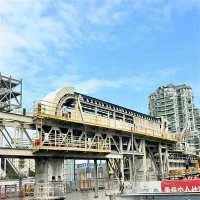

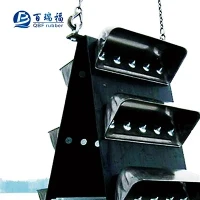
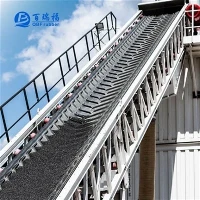


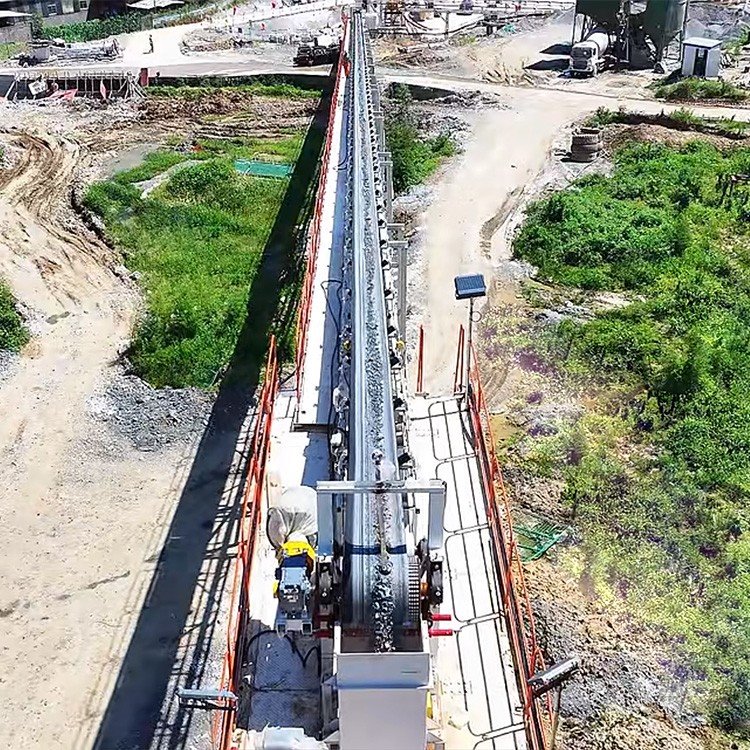

Low Rolling Resistant Steel Cord Conveyor Belt
● Long-distance, heavy-duty conveying
● Low rolling resistance rubber compound
● Temperature range: -45°C to 150°C
● Reduces material spillage by over 90% during conveying
● Elongation during operation: ≤0.2%
● Applications: Coal mines, power plants, steel mills, etc.
● Reduces carbon emissions by approximately 10%
Qingdao Best Friend Rubber & Plastic Co., Ltd. is one of the most reliable manufacturers and suppliers of low rolling resistant steel cord conveyor belt in China, also supports customized service. If you're going to buy high quality low rolling resistant steel cord conveyor belt made in China, welcome to get more information from our factory.
The Low Rolling Resistant Steel Cord Conveyor Belt uses a specialized rubber compound designed to reduce indentation rolling resistance during operation. Indentation rolling resistance is caused by hysteresis energy loss when the bottom cover rubber undergoes elastic deformation. Therefore, selecting a cover rubber with low hysteresis loss can effectively reduce this resistance.
We employ low-hysteresis-loss elastomers as the base rubber, reinforced with easily dispersible silica and carbon black-materials characterized by low hysteresis loss-to effectively lower the indentation resistance of the bottom rubber layer.

1#-Low rolling resistant bottom cover;
2#-Low rolling resistant tire rubber;
3#-Regular rubber cover.
The simulation analysis of indentation resistance :

 The Regular Bottom Cover Low Rolling Resistant Bottom Cover
About 61% of the energy consumption of the total driving energy consumption by the conveyor belt in the horizontal direction is used to overcome the indentation rolling resistance of conveyor belt in passing rollers and pulleys.

Technical data
|
Product name |
Low Rolling Resistant Steel Cord Conveyor Belt |
|
Belt Width Range |
600mm-2000mm |
|
Strength |
400-10000 |
|
Cover Rubber Grade |
General Low Rolling Resistance (LRR) |
|
Applicable Standards |
GB/T 9770 (National Standard) |
|
DIN 22131 (German Standard) |
|
|
JIS K 6369 (Japanese Standard) |
|
|
AS 1333 (Australian Standard) |
Characteristics of Low Rolling Resistance Steel Cord Conveyor Belts
1. Energy Conservation
The entire conveyor belt utilizes a low-rolling-resistance rubber formulation. Verified through field testing, this design reduces energy consumption by approximately 15%, thereby directly lowering operating costs.
2. Cover Rubber Formulation
The low-rolling-resistance formulation of the bottom cover rubber ensures that the belt's indentation rolling resistance coefficient remains ≤0.35-a reduction of 30% compared to standard specifications, in accordance with the DIN 22123 standard.
3. Efficient Operation
Compared to standard rubber cover layers, this design reduces drive power requirements by 10%–15% while maintaining the same conveying volume, and it minimizes material spillage to the greatest extent possible.
4. Conveying Distance
This product is ideally suited for long-distance conveying systems and those spanning challenging terrain. Furthermore, this low-rolling-resistance rubber cover layer is fully compatible with heavy-duty fabric-core conveyor belts.
Key Points for Conveyor Belt Maintenance
1. Regular Inspection
Regular inspections should be carried out to check the integrity of belt splices, evaluate the wear condition of the cover rubber, and ensure that the belt remains properly aligned during operation.
2. Monitor Cover Rubber Aging
The aging condition of the cover rubber should be monitored regularly to ensure that the belt continues to meet the required performance standards.
3. Maintain Troughability
It is essential to consistently ensure proper compatibility between the idlers and the conveyor belt. This maintains excellent troughability, thereby enhancing conveying efficiency and minimizing material spillage.
FAQ
Q: Does rolling resistance increase after prolonged operation?
A: Aging of the cover rubber can lead to a gradual increase in rolling resistance; however, thanks to the use of a low-hysteresis loss formulation, the rolling resistance will rise by only 5% over a five-year period.
Q: Compared to standard conveyor belts, how much energy can this belt save?
A: System energy savings can reach approximately 15%.
Q: Which standards does this conveyor belt comply with?
A: GB/T 9770, DIN 22131, JIS K 6369, and AS 1333.
Q: What is the heat resistance limit of the conveyor belt?
A: The applicable temperature range is from -45°C to 150°C.
Q: What types of conveying applications is this belt suitable for?
A: It is suitable for long-distance conveying and transport across complex terrain, and it is also compatible with heavy-duty fabric-core conveyor belt systems.
Hot Tags: low rolling resistant steel cord conveyor belt, China low rolling resistant steel cord conveyor belt manufacturers, suppliers, factory, steel cord reinforced conveyor belt, conveyor belt for logistics products, conveyor belt for wood products, conveyor belt wholesaler, Steel Cord Belt, new steel cord conveyor belt
You Might Also Like


Send Inquiry