



Specialized Conveyor Belt
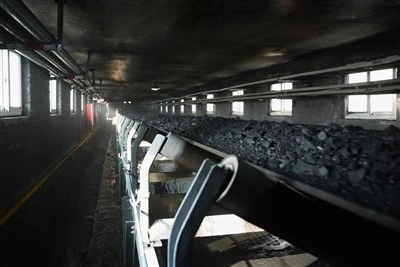
A mining conveyor belt is one of the most essential components of a conveyor system. It transports ore and other materials from the mining site to processing facilities or loading areas.
Depending on the application and several other considerations, the composition of the belt could include a plastic or rubber compound, fabric materials, and steel cables. It’s supported by rollers that allow it to safely and efficiently move ore and other materials at a predetermined speed.




What are Advantages of Specialized Conveyor Belt?

Increased Productivity
Move material more efficiently along conveyor belt systems and minimize carryback.
Keep downtime for maintenance and belt cleaning to a minimum.
Reduce spillage and equipment damage by keeping conveyor belts aligned.
Safer Operation
Manage airborne dust and minimize the risk of explosion and inhalation.
Eliminate the need for workers to enter confined spaces.
Prevent material from spilling off of moving conveyor belts.
More Profit
Deliver more product by maximizing your mine’s overall throughput.
Reduce costs by minimizing waste and reducing energy consumption.
Eliminate excessive downtime for maintenance and housekeeping.
Conveyor Belt Cleaning Systems
Clean belts are required to minimize carryback. Not only does carryback cause maintenance and additional cleanup costs, but it also impacts productivity.
Our conveyor belt cleaner systems remove up to 80% of carryback material. We supply a complete cleaning system including:
Conveyor belt scrapers to remove carryback material.
Secondary belt cleaners, made from a variety of materials, including tungsten and polyurethane, to remove fine residual material.
Conveyor belt ploughs to remove material on the return side of the conveyor belt, protecting your pulleys.
Stabilizing kits to improve belt cleaner efficiency.
Conveyor spray systems can be integrated into any belt cleaning system to upgrade your conveyor from dry to wet.
Calculator to calculate and adjust the positioning of our belt cleaners.
Impact Beds
Impact beds protect transfer points, reducing spillage and prolonging belt life. Load zones are frequently overlooked, but every tonne of material being processed passes through them. Impact beds absorb extra impacts and forces, preventing belt sag as product moves from one conveyor to another.
Conveyor Belt Tracking
Our conveyor tracking systems ensures your belts stay in the proper position by redirecting them back to the center of the conveyor. Being in the correct position reduces wear, damage, and spillage. We custom build our conveyor belt tracking solutions to suit your specific needs.
Conveyor Belt Skirting Systems
Conveyor belt skirting reduces material loss and keeps dust down. Skirts should be installed at any transfer point to control material as it moves from one conveyor to another. Our conveyor belt skirting is modular, easy to install, and comes with extended wear life thanks to stainless steel construction.
Conveyor Pulley Lagging
High quality conveyor pulley lagging solutions protect your belt and pulleys, increasing their lifespan. Our lagging solutions are ultra-long life, have superior abrasion resistance, and are suitable for surface and underground applications. They are available in a variety of materials, including hot cast polyurethane, FRAS rubber, natural rubber, and ceramic.
Abrasion and Impact Resistant
Conveyor Belts Mining operations deal with a wide range of materials, some of which are abrasive and can cause damage to the conveyor belt. Abrasion and impact-resistant conveyor belts are designed to withstand harsh conditions and protect the belt from damage. These belts are ideal for conveying heavy materials, such as rocks, ore, and gravel.
Heat Resistant Conveyor Belts
Mining operations often involve high-temperature materials that can damage conveyor belts. Heat-resistant conveyor belts can withstand temperatures from 120 to 280°C, and in some cases, up to 400°C in special applications. These belts are designed to operate in extreme heat conditions without losing their shape or durability.
Oil Resistant Conveyor Belts
Mining operations often involve materials that are greasy or oily. Oil-resistant conveyor belts are specially designed to resist oil and grease, making them ideal for use in the mining industry. These belts can also be combined with heat-resistant properties, making them suitable for hot and greasy materials.
Non-Flammable and Anti-Electrostatic Conveyor Belts
Coal mining operations require non-flammable and anti-electrostatic conveyor belts to ensure safety. These belts are designed to prevent the risk of fire and minimize the risk of explosions in hazardous environments.
Sidewall Conveyor Belts
Sidewall conveyor belts are designed to convey bulk materials at steep angles, even vertically, with high capacity. These belts are ideal for transporting materials such as coal, sand, limestone, and other heavy materials.
Special Applications Conveyor Belts
Mining operations may require custom conveyor belts designed to meet specific needs. QBF Conveyor Belt Systems offer special applications conveyor belts that are designed to meet unique requirements and applications.
Applications of Specialized Conveyor Belt
Overland conveyor belts are used for long-distance transportation of bulk materials, connecting mining sites, processing plants, and storage facilities. These belts can span several kilometres and handle large volumes of material, providing a cost-effective and efficient alternative to truck haulage.
In-pit conveyor belts are employed in open-pit mining operations to transport ore, waste rock, and other materials directly from the excavation site to processing or stockpiling areas. These belts eliminate the need for costly truck fleets, reducing fuel consumption and environmental impact.
Conveyor belts play a critical role in underground mining, transporting materials from extraction points to the surface or between various underground operations. In this challenging environment, flame-resistant and self-extinguishing conveyor belts are utilized to ensure the safety of personnel and equipment.
Conveyor belts are used to create stockpiles of different materials, allowing for efficient storage and controlled blending. By precisely controlling the discharge of materials onto the belts, mining companies can maintain consistent product quality and optimize resource utilisation.
Components of Specialized Conveyor Belt
Carcass Design
Conveyor belts used in mining applications are constructed with a sturdy carcass to withstand heavy loads and harsh environments. The carcass is typically made of synthetic materials such as nylon, polyester, or steel cord, providing high tensile strength and resistance to impact and abrasion.
Cover Materials
Mining conveyor belts feature specialised cover materials to withstand the challenges of the mining environment. Covers made of rubber compounds with high resistance to abrasion, cuts, and tears ensure durability and extended service life.
Belt Joining Techniques
Conveyor belt joints in mining operations are crucial for maintaining uninterrupted material flow. Advanced joining techniques, such as hot vulcanisation and cold splicing, provide strong and reliable connections between belt ends, ensuring seamless operation and minimising downtime.
The Considerations for Buying
Fireproofing
If your mining conveyor operates in an underground environment, it likely has to comply with MSHA Part 14 fire resistance requirements. Make sure you’re fully aware of the rules and regulations that can impact the type of belt you select for your conveyor to ensure you’re operating at maximum levels of safety, not to mention staying compliant.
Service Life
Some belts are made to last longer than others, and certain factors like longevity and durability are important based on the particular type of environment.
Conveyors running underground or transporting material from mines and quarries pose greater demands on the conveyor belt than a line in a factory transporting empty boxes.
Understand your needs when it comes to durability and ruggedness. Failure to consider this could result in productivity loss and increased downtime.
Pulley Diameter
Depending on the thickness of the belt fabric from top to bottom, there is a manufacturer-recommended pulley diameter that you’ll need to consider.
Corrosion-Resistance
Belts can corrode—especially those that incorporate metals into their makeup. While corrosion may not be as much of a worry in a climate-controlled facility, it can pose challenges on underground conveyors where temperatures, UV light, moisture levels, and humidity tend to fluctuate.
Belt Width & Length
Since all belts aren’t made for the same applications, they aren’t constructed in similar widths or sizes.
For example, the belts you see on the conveyor belt systems in grocery store checkouts are much smaller in width and length than the ones you’d find underground transporting products from the mine.
While many belts can be custom-made to fit a desired length and width, it’s always best to know your sizing requirements.
Temperature
The temperature of the materials you’re transporting is another vital consideration. For example, rock and ore that come straight from the ground could be as hot as 220°F. While this is not enough to catch the belt on fire, it could potentially cause irreparable damage.
Why Choose Us?
Rich Experience
Our management team has over 20 years of experience in the material handling industry.
Broad Market
QBF products are exported to more than 50 countries and regions around the world. They have replaced 90% of domestic imports of conveyor belts.
Wide Range of Applications
QBF products have been successfully applied in the mining, metallurgy, power plants, chemicals, tunneling, harbors, and other industries, providing innovative and efficient solutions for bulk material transportation.
Leading Service
QBF can provide full life cycle services, including pre-sales, sales, and after-sales services. QBF can always provide customers with technical diagnosis, conveyor system design, installation, engineering maintenance, spare parts, dust removal systems, and all kinds of conveyor belts as well.


Our Certificate
QBF also follow global standards with certificate. QBF will be your solution partner in sidewall belting and special conveyor belt, accessories,etc.


Contact Us
+8613969729233
Frequently Asked Questions
Q: What Are The Different Types Of Conveyor Belts?
These are the different types of conveyor belts available:
Multi-ply—Consists of various layers of fabric separated by rubber, which helps deaden impact. Tend to be longer-lasting and are used for underground applications.
Straight-warp—Ideal for tunneling applications, they’re most often used in rock quarries and rock crushers. Impact and tear resistance are the two premiere attributes, which feature yarns and polyamide on both sides. A straight-warp belt can achieve higher troughability at narrower belt widths and higher PIW ratings.
Steel-cord—Steel cables running the entire length of the belt anchor this type of conveyor belt, which is used for underground applications.
Solid woven belts—These are more popular in Europe and Asia and not used often in the U.S.
Heat-resistant—Designed to withstand high temperatures.
Q: What should you pay attention to when choosing Specialized Conveyor Belt?
Conveyors that move packaging or light materials in temperature-controlled warehouses won’t have the same demands as those transporting heavy products underground in mines and quarries.
This is why the application and environment should be the two top considerations when selecting a mining conveyor belt.
The key difference between above-ground and underground mining belts is the materials used in the manufacturing process. A standard surface or above-ground mining conveyor belt is composed of highly flammable petrochemicals. If used in an underground mining application, there’s a good chance that the belt can combust and present a severe safety hazard.
UNDERGROUND
Underground mining belts are made of flame-resistant materials. Special agents, impregnation paste, and rubber components are added during manufacturing to help decrease the friction factor and increase fire resistance.
SURFACE/ABOVE-GROUND
The selection of an above-ground conveyor belt is mainly determined by the properties of the raw materials you’re transporting. The levels of humidity, granularity, and abrasion characteristics are all essential factors in this decision.
For example, highly abrasive materials such as iron ore, metallurgic coke, and quartz will require a much sturdier belt than moderately abrasive materials, such as ash or sand.
Q: Why choose Specialized Conveyor Belt?
Underground Mining
Safety is something of paramount importance when working in the underground mines. In such environments, there are always so many challenges and calamities. One of such calamities that at times affect the underground mines includes fires. It is therefore of great importance that an underground mining conveyor belt should be fire resistant. There are certain international as well as national standards that all the conveyor belts have to fulfill. This is a reprieve for many as this implies that all the certified underground conveyor belts satisfy all these safety standards.
There are numerous models and brands of underground conveyor belts in mining. Due to the many activities as well as harsh working conditions in the mines, a good belt for such environments needs to be resistant to cutting and abrasion. Therefore, one quality conveyor belt will be used in the entire mining process starting from the mine face, transportation, to the processing location and finally to the final blending, mixing and stocking.
Opencast Mining and ore processing
Most of the minerals that are mined as raw materials for most of the industries are mined through open cast mining. Such minerals are very bulky and will always need that the conveyor belts used in handling them be of high resistance due to heavy impacts on site. Due to such impacts, weak or less resistant materials will be susceptible to ripping and tearing. The primary stages of mineral production are especially associated with lots of impact. In addition to being impact resistant, the conveyor belts in mining also need to be abrasion resistant since they will have to handle so many thousands of tones within an hour.
In a nutshell, conveyor belts used in the mining industry are responsible for handling very bulky materials. This industry therefore needs the best quality conveyor belts for maximum production to be achieved.
Q: What are the specifications of Specialized Conveyor Belt?
Multi-ply: A belt where its layers are separated by rubber to help with impact resistance; tends to be a long-lasting belt.
Straight warp: These belts are fairly impact and tear-resistant, and feature yarn and polyamide in their structure.
Steel cord: Steel cables anchor and run the length of the belt.
MINING CONVEYOR BELT SIZE
The right mining conveyor belt should be relative in size to the material being transported.
Mining conveyor belts come in varieties such as:
Tensile rubber
Nylon
Smooth rough top chevron rubber
Bottom smooth rubber cover
Fabric
Ply stacker impact
Among others
Width sizes typically range from 200 millimeters up to 2,400 millimeters, while thicknesses range from 400 millimeters up to 2,000 millimeters. Depending on the type of belt that you select, widths and thicknesses may vary.
Make sure that you know which width and thickness are best for your application and tension. Not selecting the proper dimensions can greatly impact productivity.
MINING CONVEYOR BELT TENSION
Another important variable is PIW, or pounds per inch of width.
PIW measures tension as it pertains to the longitudinal strength that it takes to move the belt and torque required to activate the system.
The formula to determine PIW is as follows:
HP (System motor horsepower (1+K) 33,000/ S (Belt speed) x W (width of belt)
In addition to the different types of belts, there are also various materials, like rubber and fabric, that are used in its composition.
Be sure that you very carefully assess the tension of the rubber and fabric (or other material) before you decide on the type of belt that is best for you.
Q: What are the outstanding features of Specialized Conveyor Belt?
Abrasion resistance is an important factor to keep in mind when comparing and selecting a conveyor belt, especially for conveyors working in mines.
Fortunately, conveyor quality has improved over the past few years thanks to better alignment technologies, maintenance techniques, rip detection equipment, and a greater level of attention paid to preventative service.
The most common type of abrasion is the material rubbing against the belt. Hard rock and pellets tend to wear a conveyor belt faster than coal, for example.
Material density and the speed at which the belt is running can also impact the rate of belt wear. The other type of abrasion is cutting and gouging, usually from jagged or sharp surfaces like limestone, granite, ores, etc.
To determine abrasion resistance, we prefer the DIN abrasion test method, which measures the volume loss of a prepared puck-like object. The puck is weighed before and after the test, and the volume loss is calculated. Obviously, the lower the volume loss, the better it is for abrasion resistance.
To improve abrasion resistance, you can make adjustments to how the belt is operating. Or you can choose a more durable belt, a different type of belt fabric, or acquire a belt cover.
Q: Why choose our Specialized Conveyor Belt?
Whether you’re mining coal, precious metals, base metals or aggregates, you can rely on the fact that QBF has been a leader in the original development of the conveyor belt equipment used today to make mining operations cleaner, safer and more productive.
When you’re surface mining or mining underground for hard or soft rock, your challenges are formidable and you could definitely benefit from our experience with mining operations that literally spans the globe. We employ many people who have worked extensively in the mining industry, so we’re able to apply lessons learned from all over the world to solving your everyday problems.
Effective solutions to your most challenging problems.
We can help you better address the dust suppression issues associated with surface mining and keeping good community relationships. We can help you deal with the belt cleaning challenges associated with the large amounts of water used in your underground mine. We share your concerns for your employees when it comes to respirable dust and other health and safety risks inherent in the mining industry.
QBF manufactures conveyor equipment designed to keep your product moving efficiently from the face of an underground coal mine or the high wall of a quarry, through the prep plant, to the boiler or loading site. With our quality products and our skilled team of installation and maintenance personnel, we help you keep your conveyor belt operation running cleanly and safely at max capacity.
Knowledgeable people. Unmatched service.
We take the time to understand the specifics of your mining operation, which allows us to provide the correct equipment for your problem and point out areas where you can be even more productive, more efficient and more profitable.
With our experienced technicians, we’re able to offer an unmatched level of support and service to the facilities we visit. And many of our engineers and technicians have previously worked for mining companies like yours, so we have a unique perspective and advantage when it comes to knowing the issues you face from your viewpoint. We have decades of direct experience, and we know where the process can get bogged down. More importantly, we know how to fix the problems when they arise.
Q: What does the Specialized Conveyor Belt consist of?
Belt conveyors intended for mining often require more durable materials of construction. This might include utilizing heavier-construction belting, larger diameter idler rolls and bearings, higher service factors for drive selection, or galvanizing frames to protect against the elements. Similarly, depending on the material, alloys and special cover compounds may be employed to defend against corrosion or other concerns.
Pulleys & Idlers
Depending on the application, pulleys are typically either mine-duty or heavy-duty.
Skirtboards
Skirtboards are made from heavier materials, with wear liners added when necessary. Impact tables are often used at load zones, with skirt sealing systems along the remainder of the skirts in order to prevent spillage.
Drive Assemblies
Drives may require a soft-start package or fluid couplings to aid in starting a conveyor under full load, which happens often at mine sites. Heavy-duty motors and gear reducers are also frequently employed to accommodate the demanding loads so characteristic of the industry.
Wear Liners
In addition to selecting the appropriate materials of construction, wear liners are also commonly added to conveyors for mining applications. Wear liners are available in a variety of materials to suit the needs of the specific application. Common materials for wear liners include UHMW, Tivar, Stainless Steel, Abrasion-Resistant plates, and more.
Dust Suppression
When dust is a concern, a dual sealing-type skirt rubber (apron seal) can be employed to minimize dusting at load points. Dust pick-off points for managing fugitive dust at transfer points may also be necessary in some cases.
Q: What are the common transmission belts?
PVC conveyor belts, or otherwise known as solid woven conveyor belts, are used in the mining sector to transport aggregates, materials, and fines from the mine (whether open-pit or underground) to the mine plant and/or the stacker system. PVC is used both in underground and above-ground applications and is known for its anti-corrosive properties. PVC is also flexible, putting less strain on the conveyor support. It is resistant to damage, resistant to impact damage and cannot be damaged by oil and bacteria. PVC conveyors are also very easy to install, and there are numerous different kinds of PVC belt weaves with different levels of strength and resistant properties.
Rubber Conveyor Belts
Rubber conveyor belts are used in both the mining as well as industrial applications. As a cheaper alternative to the PVC and nylon weave conveyor belts, rubber conveyor belts still provide the corrosion resistant properties, and flexible support for delivering materials, however, rubber conveyor belts are not as resistant to tearing and impact damage as the solid woven belts.
Wire Reinforced Conveyor Belts
Wire mesh conveyor belts or those wire belt systems are more rigid than the PVC and rubber conveyor belt systems. However, they can be used in a number of applications of which rubber and PVC cannot. This includes any process that involves the application of heat. For this reason, wire belt systems are used in many industrial processes for manufacturing. Heat resistant conveyor belts are mainly made from metal composites with varying levels of limited anti-corrosive properties. Wire-reinforced PVC belts are also constructed for the mining sector whereby they may be less flexible and more difficult to install and manage, but they can perform while carrying incredibly heavy loads.
Food Industry Conveyor Belts
Much like the metal conveyor belts, food industry conveyor belts are mainly made from metal composites. The food industry often requires complex conveyor systems for the various stages of the food production process, so each wire belt system needs to be custom designed for the operation at hand. These belt systems also require heat resistant properties, but they also have to be treated in such a way that will not result in food contamination.
Q: How to maintain Specialized Conveyor Belt?
The points mentioned below are understood well by all of us but are sometimes forgotten because belt conveyors are comparatively easy to operate. Maintenance of any conveyor belt is dependent upon the fundamental characteristics of the two component parts—cover and carcass.
The interior cotton fabric, cord, steel cable, or synthetic fibre plies supply the main structural strength of the belt. They do the work of supporting and pulling the load, whereas the rubber covers provide resistance to corrosion, abrasion and impact. The load-carrying carcass plies are subject to many hazards such as abrasion, impact and corrosion. The rubber with which they are covered and impregnated is many times more resistant to these damaging conditions. Rubber can stand up well against abrasive action and shock impact as long as the force involved does not distort the rubber beyond its elastic limit. When the rubber cushion cover of a belt is distorted beyond its capacity to yield, the surface is cut or broken and the protective cushion torn away, leaving the interior carcass exposed to damage. Injury and damage are of far greater importance in determining how long a belt will last than the number of tons of material carried.
Is the load on a particular conveyor belt dropping from a height greater than necessary onto the belt? Install an inexpensive short feeder belt to take the greatest abuse, Use a pad belt at the loading point for severe impact loading conditions. Several types of shock impact rubber-covered carrying idlers may be used at the loading point, A screen or grid that permits fine material to be placed on the belt first and act as a cushion for larger lumps is standard practice for good loading, For some types of loading the middle horizontal carrying idlers have been removed to eliminate hammer and anvil action.
It is expected that troughing idlers, return idlers, as well as drive terminal, snub or takeup pulleys, be maintained with a clean surface for belt alignment and long life, Terminal Pulleys. Granted that head and tail pulleys are of proper diameter for belt width and thickness the life of a conveyor belt is often endangered by slippage on pulleys and caused by lack of cleaning. Accumulation of such material may cause the belt to run to one side, seriously damaging the belt edge. Material may cling to the belt beyond the drive snub pulley location and then build up on return or takeup pulleys to again cause serious belt misalignment and damage, High tension snub pulleys operating against the dirty side of the belt may be lagged with a ½-in. thick soft rubber lagging with smooth surface. The movement of soft rubber surface tends to brush off material buildup on the belt, A layer of 3/8-in. soft rubber may be vulcanized or lagged to drive pulleys. Lateral or herring-bone grooving of the rubber pulley surface provides not only a surface movement for cleaning, but also a higher coefficient of friction for wet drive conditions, The use of all-rubber wiper blades is usually most effective in conjunction with water spray.
Considerable attention should be given to return idler cleaning inasmuch as these idlers all contact the belt carrying side. As stated before, buildup on return idlers may cause the belt to run off and damage belt edge. Several means have been used to clean return idlers, Carrying idlers. In some conveyor installations there is a tendency for moisture to condense on idlers and combined with ore forms a coating on the moving parts of the idlers. Corrosion of metal parts may result, with an eventual frozen idler to cause misalignment.
Conveyor belts are best repaired by electrically-heated vulcanizers of the appropriate size to accommodate certain width belts. Vulcanized repairs can be made by any good plant maintenance man after a few hours of instruction. Repairs usually require replacement of broken carcass plies and/or missing cover patches with new unvulcanized stock. Belt splices are made in much the same manner as repairs using a conventional step-splice design.
Q: What Sort Of Maintenance Do I Need To Do For My Belts?
Daily maintenance includes checking for belt mistracking, belt slippage, material carry-back, greasing roller bearings, and performing scraper maintenance.
Weekly/monthly checks for belt slippage, mistracking, and material carry-back, and repair or replacement of idlers, rollers, and dust containment systems are recommended. Malfunctioning equipment such as scrapers, idlers, belts, and, rollers should be repaired or replaced as needed.
Q: What are the technical advancements of Specialized Conveyor Belt?
Conveyor Belt Cleaning Systems: Innovations in belt cleaning mechanisms have improved the efficiency of removing carry back and material buildup from conveyor belts. Semi-automated systems with scrapers are employed to maintain belt cleanliness, reducing the risk of belt damage and improving overall system performance.
Conveyor Belt Splicing Technologies: Modern splicing techniques, such as hot vulcanisation and cold splicing, have enhanced the strength and durability of belt joints. These advancements ensure reliable and long-lasting connections between belt ends, minimizing the risk of unexpected failures during mining operations.
Q: What types of Specialized Conveyor Belt are there in coal mining?
Coal mining operations involve handling materials that are highly flammable. Therefore, it is essential to use conveyor belts that are specifically engineered to withstand and mitigate the risk of fire.
Flame-resistant conveyor belts are designed with self-extinguishing properties, which means that they will not contribute to the spread of fire. These belts are typically made of a combination of synthetic materials and rubber compounds, ensuring durability and resistance to ignition.
Underground Conveyor Belts
In underground coal mining, conveyor systems are utilized to transport coal from the mining face to the surface. Mining conveyor belts are designed to operate in challenging conditions of underground mining.
Mining conveyor belts are constructed high-tensile strength materials to withstand the rugged environment and the abrasion caused by coal particles. They are equipped with robust fasteners and reinforced edges to prevent belt damage and ensure reliable performance.
Overland Conveyor Belts
Overland conveyor belts are used to transport coal over long distances, from the mining site to designated storage, processing facility. These conveyor belts are designed with exceptional strength and durability to endure the demanding conditions of long-distance coal transportation.
These feature reinforced carcasses and cover compounds that provide resistance against abrasion, and environmental factors moisture and UV radiation
Steel Cord Conveyor Belts
For heavy-duty applications in coal mining, steel cord conveyor belts are often the preferred choice. These belts consist of steel cables embedded in a rubber matrix, offering exceptional strength and tear resistance.
Sidewall Conveyor Belts
In certain coal mining scenarios, where vertical lifting is required, sidewall conveyor belts are employed. These belts are designed with corrugated sidewalls and cleats that effectively contain the material being transported, preventing spillage and maximizing efficiency.
Sidewall conveyor belts are particularly useful in situations where space is limited, allowing for steeper inclines and vertical conveying, ultimately optimizing the overall coal mining process.
Heat-Resistant Conveyor Belts
Coal mining operations often involve exposure to high temperatures, especially during the transportation of freshly mined coal.
Heat-resistant conveyor belts are specifically engineered to withstand elevated temperatures without compromising their structural integrity
These HR rubber belts are made from materials that exhibit excellent heat resistance properties, ensuring reliable and efficient coal transportation in hot environments.
Oil-Resistant Conveyor Belts
In coal mining operations where the presence of oils and greases is common, it is crucial to use conveyor belts that are resistant to such substances.
Oil-resistant conveyor belts are manufactured with synthetic rubber compounds that repel oil and prevent its absorption, thereby preserving the belt’s integrity and performance. These belts are essential for maintaining the efficiency and longevity of the conveying system, even in the presence of oil contaminants.
Abrasion-Resistant Conveyor Belts
Coal mining involves the handling of abrasive materials that can cause significant wear and tear on conveyor belts. Abrasion-resistant conveyor belts are specially designed to withstand the abrasive forces exerted by coal particles, minimizing belt damage and service life.
Heavy duty conveyor belts are engineered with high-quality abrasion-resistant materials and reinforced layers to ensure long-lasting performance coal mining environment.