



Filter Conveyor Belt
Your Professional Filter Conveyor Belt Supplier
Qingdao Best Friend Rubber & Plastic Co., Ltd. (Short as QBF) has been involved in the design, manufacturing, engineering, and service of bulk conveying systems. They focus on the production, research and development of European standard long-life filter conveyor belt. Our products include filter conveyor belting, vacuum rubber filter belts.
Why Choose Us
Rich Experience
Our management team has over 20 years of experience in the material handling industry.
Technical Support
QBF offers full service for your belt conveyor system and provides their technological competence on a worldwide basis.
Quality Assurance
Customer-tailored quality assurance to different global standards like DIN, EN, ISO, AS, JIS, SANS, RMA.
Leading Service
Experienced and motivated staff with 24-7 service availability and local partners in different countries.

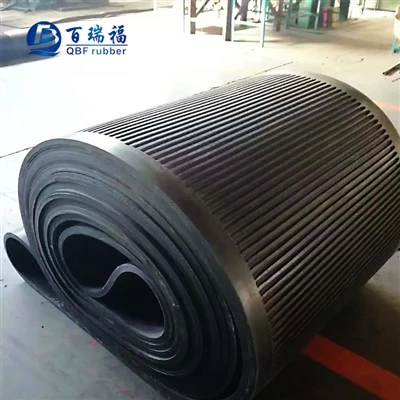
Types of Filter Conveyor Belt
Filter Conveyor Belting
Filter conveyor belt has been used in specialized dewatering process equipment for separating solids from liquids in a slurry.
Vacuum Rubber Filter Belts
Vacuum rubber filter belts support the belt filters with a continuously operating for the reliable separation of quickly sedimenting solids from suspensions.grooves are cut into the rubber top cove and mostly in the middle, there is drilled holes.

Parameters of Filter Conveyor Belt
|
Width |
500 – 6000mm |
|
Layers |
3-10ply |
|
Rubber Cover Up |
10 – 20 mm |
|
Rubber Cover Bottom |
3-8mm |
|
Longitudinal full thickness tensile strength |
200–3000N/MM |
|
Groove Depth |
10-15mm |
|
Tensile Strength |
10-25MPA |
Advantages of Filter Conveyor Belt
High Chemical Resistance
One of the significant benefits of filter conveyor belt is its high chemical resistance capabilities. It can withstand harsh chemicals and solvents without deteriorating or getting damaged.
Withstands Harsh Conditions
One of the key benefits of filter conveyor belts is their high performance. These belts are designed to withstand the harsh conditions of industrial environments and provide a reliable filtration service even in the most demanding applications.
Low Maintenance
Another important benefits of filter conveyor belts is their low maintenance requirement. These belts are designed with easy installation and maintenance in mind, minimizing the need for costly and time-consuming maintenance procedures.
Efficient Filtration Performance
They allow liquids or small particles to pass through while retaining larger solid particles, making them ideal for applications like sludge dewatering, pulp washing, and wastewater treatment.
Application of Filter Conveyor Belt
Mining
In mining, filter conveyor belts are vital for the efficient transport of ores and minerals from mining sites to processing facilities.
Agriculture
Filter conveyor belts play a versatile role in agriculture, from transporting grain and seeds to moving hay bales and other bulk products.
Pharmaceuticals
Filter conveyor belts designed for this sector are made from materials that are easy to clean and resist contamination, ensuring that products meet strict hygiene standards.
Manufacturing
Filter conveyor belts are the backbone of manufacturing operations, moving components and finished goods along production lines with efficiency and speed.
Wastewater Treatment Plants
Filter conveyor belts are commonly used in wastewater treatment to separate solids from liquids during the sludge dewatering process.
Pulp and Paper Industry
In the production of paper, filter conveyor belts are used for pulp washing, dewatering, and other filtration processes.
Common Filter Conveyor Belt Materials
Rubber
Rubber is one of the most commonly used materials for filter conveyor belts due to its high durability, flexibility, and excellent shock absorption properties.
01
PVC(Polyvinyl Chloride)
PVC conveyor belts are lightweight, cost-effective, and resistant to a wide range of chemicals.
02
PU (Polyurethane)
Polyurethane (PU) conveyor belts are known for their high wear resistance, lightweight nature, and versatility.
03
Polyester (PET)
Polyester is one of the most common materials used for filter conveyor belts. It offers good resistance to wear and tear, chemical corrosion, and high temperatures.
04
Polypropylene (PP)
Polypropylene is a lightweight, cost-effective material that is resistant to acids, bases, and various solvents.
05
Filter Conveyor Belt Use Requirements
Emergency Stop Controls
Strategically placed along the conveyor to allow immediate shutdown in case of an emergency, minimizing potential hazards.
Guardrails and Barriers
Installed around moving parts to prevent accidental contact with the conveyor belt and rollers, reducing the risk of injury.
Regular Maintenance and Inspections
Scheduled checks to identify and rectify potential issues before they lead to accidents, ensuring the conveyor’s safe operation.
Training for Operators
Comprehensive training programs for all personnel involved in the operation and maintenance of the conveyor, emphasizing the importance of safety protocols.
Safety Signage
Clear and visible signs warning of potential dangers and instructing on proper behavior near the conveyor.
Lockout/Tagout Procedures
Established protocols for safely isolating the conveyor from power sources during maintenance, preventing accidental startup.
Belt Misalignment Switches
Devices that detect and signal when the conveyor belt is off-track, allowing for quick correction to prevent damage or accidents.
Speed Controls
The ability to adjust the conveyor’s speed according to the type of materials being transported and the operational conditions, enhancing safety and efficiency.
FAQ