


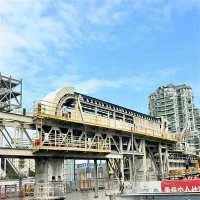


Bucket Elevator Conveyor Belt
Heat Resistant Bucket Elevaor Belt
Bucket Elevator Belt
The bucket elevator belt has been designed to meet the requirment of bucket elevators.
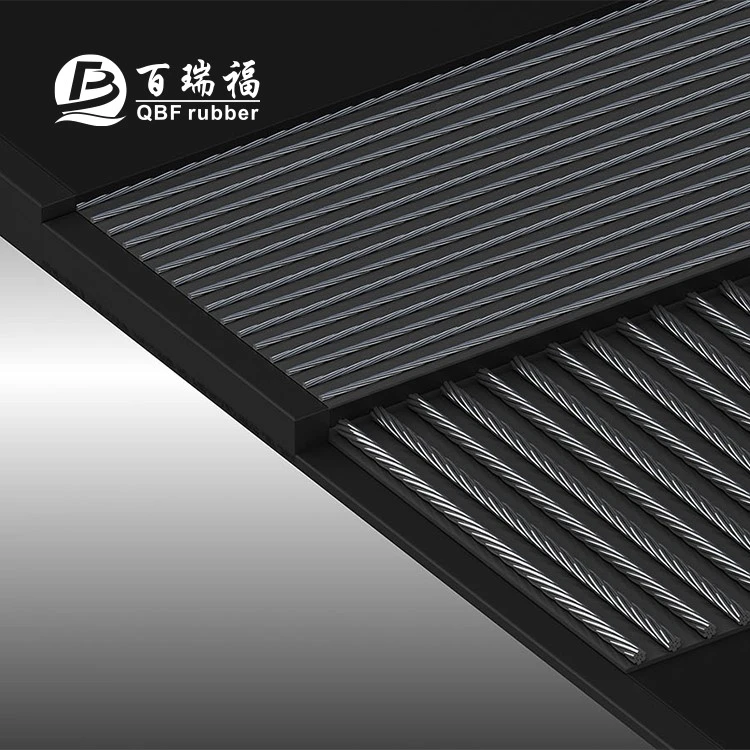
The carcass could be muli-ply fabric, steel cord or straight warp construction to distribute load evenly with low elongation.
We have different rubber compound to unsure the performnance at different job sites: high abrasion, oil resistant, anti static, acid&alkali resistant, hear resistant, high temperature resistant, fire resisntant, etc.
It has been always a great challenge for heat resistant bucket elevator belt, especially when the temperature is over 200℃. The rubber cover may qiuckly get cracked due to the temperature of materials and then transfered to the carcass which will cause poor adhesion between rubber cover with carcass, leading to belting failures. The right choice of carass and rubber compound are both critical to a successful performance. The heat resistant bucket elevator belt has been proved reliable and stable with lots of installations worldwide.
System Solutions
We could offer the system solution as below:
* Most enconomic belting selection
* Right rubber comppound
* Right carcass fabric/steel cord/straight ward/ heat resistant fabric
* Compatible splicing sets
* Guidance on repalcement installation
* Guidance on maintenance
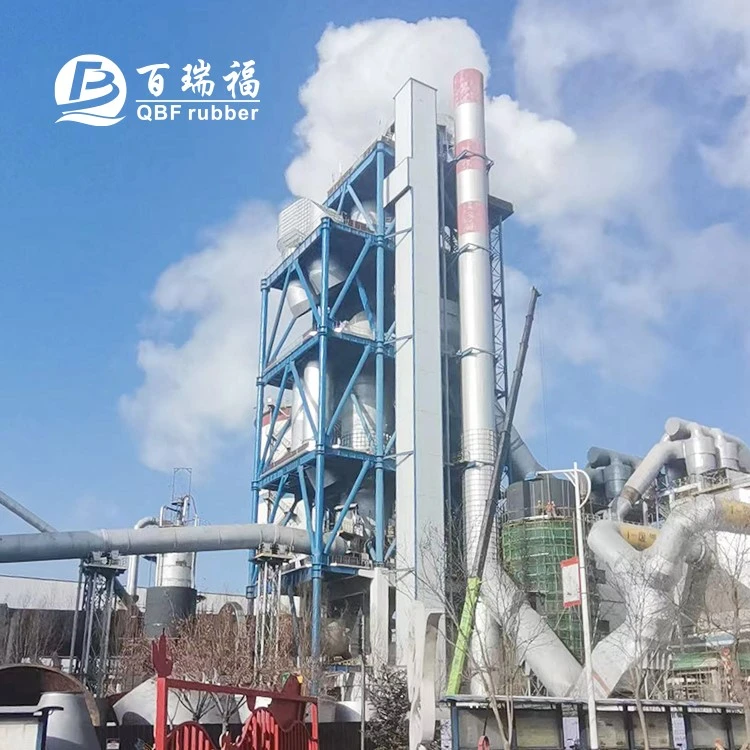

Your Professional Bucket Elevator Conveyor Belt Supplier
Qingdao Best Friend Rubber & Plastic Co., Ltd. (Short as QBF) has been involved in the design, manufacturing, engineering, and service of bulk conveying systems. They focus on the production, research and development of European standard long-life sidewall conveyor belts and other special rubber conveyor belts. Our products include sidewall conveyor belts, specialized conveyor belts, conveyor belt accessories, a cold bonding system, and pulley lagging.


Why Choose us
We have been well known for our tailored solution to our clients mainly in cement industry, steel industry , power plant, fertilizers, and buliding materials, mining industries etc.
* Very good straighness
* Perefect hole finish
* Long service life
* Steel cord zone available when requested
High-Quality Customized Services
No intermediate links, providing one-stop service from design, processing, mold trial to mass production.
A bucket elevator belt is a combination of high strength belting with metal or plastic buckets attached to it. It is commonly used for elevating bulk products in granular form in an enclosed structure to a higher point for unloading into a silo.Our bucket elevator belts with multi-layer fabric construction distributes load evenly reducing elongation.
High Capacity
Bucket elevators can handle high-capacity loads of materials, making them ideal for use in industries that require the transportation of large volumes of materials.
Minimal Maintenance
Bucket elevator belts are designed to be durable and require minimal maintenance. This helps to reduce downtime and keep operations running smoothly.
Versatility
Bucket elevator belts are highly versatile and can be customized to meet specific industrial needs. They can be made from a variety of materials, including rubber, PVC, and polyurethane.
Energy Efficiency
Bucket elevator belts are designed to be energy efficient, helping to reduce energy costs and improve the overall sustainability of industrial operations.
Easy to Install
Bucket elevator belts are relatively easy to install, which helps to minimize downtime during installation and maintenance.
Space-Saving
Bucket elevators are designed to transport materials vertically, which helps to save valuable floor space in industrial facilities.
Reduced Material Loss
Bucket elevator belts are designed to prevent material loss during transportation. This helps to minimize waste and improve the overall efficiency of industrial operations.
Types of Bucket Elevator Conveyor Belt
Abrasion Resistant Belting
General purpose plied rubber belting ideal for handling harsher industrial applications like aggregates, cement, fly ash, minerals, salt and raw sugar.
High Temperature Belting
Premium high temperature belting ideal for handling silica sand, aggregates, fly ash, cement and other bulk materials in drying facilities.
Heat-Resistant Belting
EDPM belting covers perform over the long run while retaining its flexibility despite punishing conditions and loads. Less cracking and hardening translates into longer life and reduced replacement costs.
High-Temperature Resistance to Tearing, Abrasion and Stretching Belting
Load after load, pure EPDM covers combined with premium HT treated fabric stands up to prolonged exposure. This reduced maintenance and downtime helps lower overall operating costs.
Applications of Bucket Elevator Conveyor Belt
Agricultural Sector
Grain Handling: Bucket elevator belts are crucial in transporting grains and seeds vertically, streamlining the agricultural supply chain from harvesting to processing and storage.
01
Mining and Minerals
Ore and Minerals Transport: In the mining industry, bucket elevators equipped with durable belts efficiently move ores and minerals to higher levels for processing and refinement.
02
Manufacturing Industries
Bulk Material Handling: Various manufacturing processes involve the movement of bulk materials such as cement, chemicals, and fertilizers, where bucket elevators with specialized belts ensure smooth and reliable vertical transport.
03
Food Processing
Powders and Granules: Bucket elevator belts are essential in the food industry for lifting and conveying powdered or granulated materials, including sugar, flour, and other ingredients used in food processing.
04
Construction and Aggregates
Concrete Production: Bucket elevators are integral to the production of concrete, aiding in the vertical transportation of aggregates like sand, gravel, and crushed stone.
05

● Check the conveyor belt for cuts, cracks, or damages.
● Take note of any belt slippage or material spillage.
● Check for any conveyor belt abrasions.
● Check the upper and lower cover rubber for damage and excessive wear.
● Check the belt chain for any extra slack, fraying, buildup, or damage.
● Check for carryback. Carryback is the material that sticks to or embeds into a conveyor belt or chain rather than discharging at the head. The conveyor “carries back” the material until it falls off under the conveyor (tailings) or is otherwise removed. There are two ways to reduce this issue. First, belt cleaners can reduce and sometimes even completely eliminate carryback. Second, belt scrapers (which are installed in primary and secondary locations) remove residue and debris from the belt, and will drastically reduce your carryback.
The Considerations for Buying
Depending on the materials you plan to transport, you’ll need to select a belt with specific properties.
Food-grade belts: Designed for the food industry, these belts are made from materials that meet FDA and USDA guidelines.
Abrasion-resistant belts: Ideal for handling rough or abrasive materials, these belts can withstand wear and tear.
Heat-resistant belts: Suitable for high-temperature environments or transporting hot materials, these belts can withstand extreme temperatures.
The size of the belt is crucial for efficient operation. Consider the following dimensions.
Width: Choose a belt width that can accommodate your materials without overloading or spillage.
Length: Ensure that the belt length matches your vertical transportation requirements.
Thickness: A thicker belt provides better durability and load capacity but may also require more energy to operate.
Load capacity: Determine the weight of the materials you’ll be transporting and select a belt with a load capacity that can handle it without compromising efficiency or safety.
When evaluating potential elevator belts, pay attention to the following features.
Durability: Look for high-quality materials and reinforcement options that ensure a long-lasting and reliable belt.
Ease of maintenance: Prioritize belts that are easy to clean and repair, which can save time and reduce downtime.
Safety: Ensure the belt complies with industry standards and features anti-slip and fire-resistant properties to minimize potential hazards.
Partnering with a reputable manufacturer is essential for obtaining a high-quality elevator conveyor belt. Consider the following factors:
Reputation and expertise: Research the manufacturer’s experience and track record within the industry.
Customization options: Choose a manufacturer that can tailor the belt to your specific requirements.
Quality assurance and warranties: Opt for manufacturers that offer warranties and stand by the quality of their
Customer support: A manufacturer with responsive and knowledgeable customer support can make all the difference when you need assistance or have questions about your elevator conveyor belt.
Our Factory
QBF is one of the leading R&D company of Heavy-duty Cleat, PE board leak-proof structure, sticky material easy-to-clean formula and personalized color glue in China. Largest Sidewall conveyor belt single production enterprise in Asia.
QBF holds leading technology and market cases in the fields of lifting height, large Conveying capacity, steep incline lifting, single length, anti-stick and other products.


Our Certificate
QBF also follow global standards with certificate. QBF will be your solution partner in sidewall belting and special conveyor belt, accessories,etc.


Contact Us
+8613969729233
Frequently Asked Questions
Q: When is Bucket Elevator Conveyor Belt needed?
A bucket elevator transports material to a higher or lower point. Typically, the bucket elevator functions at a 90-degree vertical angle, but there might be times when there is an incline or decline within the conveyor system. It will depend on your production needs.
Based on the setup and your production needs, the buckets can be emptied onto the next conveyor system or platform, allowing the goods to continue to the next assembly point.
Q: What are the characteristics of Bucket Elevator Conveyor Belt?
QBF’s belt-type bucket elevators belt include a heavy-duty, abrasion resistant black Styrene Butadiene Rubber (SBR) belt with covers on both sides. The SBR compound is a synthetic rubber that offers superior abrasion and cracking resistance. The belt has a working temperature of -20°F to 225°F with heat resistant (HR) belt up to 400°F also available. Other belts available include Moderate Oil Resistance (MOR), Mine Safety Health Act (MSHA) approved and Static Conductive (SC) for various applications.
There are various methods and fasteners used to splice or join the two ends of the belt. QBF standard method is the mechanical splice. This clamping style splice minimizes the stresses on the outer plies of the belt that occur as the belt passes around the head and tail pulleys. These splices install and can be removed easily for elevator maintenance.
Q: Why use Bucket Elevator Conveyor Belt?
ADVANTAGES
High pull-out resistance of fixing screws.
Very low elongation at reference load.
Also possible with transverse reinforcement.
Rubber cover possible with cured in grooves/holes for fixing metal boards.
Belt damages arising from fabric destruction are limited.
Asymetric cover thickness possible.
High adhesion strength.
High cost -efficiency due to low maintenance and operational expenses
Low cost endless splicing by hot curing, cold treatment, or mechanical clamping.
Favourable belt price / efficiency ratio.
Improved weathering and rotting resistance.
Moulded or cut rubber edge.
Various types of rubber.
Q: What types of Bucket Elevator Conveyor Belt are there?
The structure of elevator belts is a steel carcass composed by a strong warp of steel cord with suitable elastic modulus such to reach the best compromise between low elongation and good flexibility. This characteristic makes the belt easier to be aligned than traditional steel cord elevator. Furthermore, the cable elasticity allows the use of pulleys with lower diameters, depending on the requirements of clamps and buckets.
TEXTILE ELEVATOR BELTS
Belts designed to be used in bucket elevator plant only. The special construction of the reinforced polyester-nylon fabrics assures the use of such belts also for severe loading requirements.
The result are the following:
Polyester warp assures high resistance to heavy working conditions.
Nylon weft guarantees transverse tearing strength and strong bolt holding.
Are supplied with cut edges because sintetic fabrics used for their production do not need protection against humidity as they can’t absorbe any liquid. The 2 mm thickness both for top and bottom cover is designed to protect the carcass and at the same time assures the best bucket support without bolt loosening.
Q: What Are Elevator Conveyor Belts?
For example, let’s say you work in the food industry. You could use these elevator conveyor systems to help transport food within your facilities. If you need to transition fruit, such as apples, from an upper floor to a lower floor, these elevator conveyor belts can make this process easier and much more efficient! Please note that this is just an example. You can still use this conveyor system for other industries or products too.
Elevators traditionally play a key role in several industries. From material handling to sorting and shipping, small elevators help carry goods between floors in no time at all. These could be heavier resources like coal and metal or even larger quantities of grain and rice. As this technology evolved, it was then honed and adapted to suit more modern infrastructural needs, helping to transport people as well.
Q: What is the use of Bucket Elevator Conveyor Belt?
Depending upon its intended use, it can be designed with varying weight, size, capacity, and design. The weight lifting mechanism used in these belts can be electric, hydraulic, mechanical, and even manually operated.
Bucket Elevator Belt is an essential part of industries such as oil mills, manufacturing plants, mines, smelters, and similar industries dealing in the processing of bulk materials. These can be seen working successfully in industries dealing in food production, grains, metal ore, liquid processing, and alike.
Q: How does the Bucket Elevator Conveyor Belt work?
Bucket elevators are very commonly used in sites where bulk material is to be elevated. The inherent simplicity of the gear makes it easy to maintain with a cost-effective operation. With the passage of time, there has been a gradual improvement in the bucket shape, size, belt durability, and motor capacity to aid typical industry processes.
Q: What advantages does the Bucket Elevator Conveyor Belt offer industrial operations?
Speed up the lifting process
No or very little human labor required
Smooth and dependable transportation
Low maintenance gear
Longer service life
Customizable as per requirement
These belts are efficient gear that can change the way a plant works enhancing its productivity by regulating its operations.
Q: How does the Bucket Elevator Conveyor Belt work on the machine?
The lift belt is reinforced with steel cables running longitudinally throughout its entire length. Corrugated side walls are attached, also running longitudinally for the entire length. Pockets are formed by rubber “cleats” which are bolted onto the belt, using side bars, through the side walls. The cleats are secured to intermediate blocks of rubber, and inside each are embedded stainless steel “U” bolts whose ends protrude from the rubber. Each block is attached to the belt by a cold adhesive process. The cleats are secured to the “U” bolts using stainless steel cap nuts.
The Bucket Elevator lift belt therefore has pockets on its carrying side and is smooth on the other. The lagged pulley drives on the smooth side of the belt, and there is no hydraulic take-up arrangement. Belt tension is set by the tail pulley position using jacking screws.
The belt is driven by two hydraulic motors which are attached to each end of the drive pulley shaft located at the top of the lift belt casing. The ratchet type backstops are located adjacent to the drive motors and are attached to the upper aft deflection wheel shaft of each belt, which allows the belt to rotate in one direction only. Any change of direction of this belt is effected by ‘deflection wheels’ which are on the carrying side edges of the belt when change of direction is desired. The loading of this belt is transferred via chutes on the carrying pocket side at the bottom just aft of the take-up pulley. The underside of the belt, along its loading area is supported by load rollers, which are rubber lagged to absorb the impact of the cargo.
Q: Where can Bucket Elevator Conveyor Belt be used?
Heating and power stations, garbage incinerating plants.
Asphalt mixing plants.
Recycling, compost, mineral processing plants.
Timber industry and sawmills.
Farming / Warehousing, silo feeding.
Docks, ship loading and unloading.
Sugar refineries, salt mines, potatoes and starch factories.
Foundries.
Waste treatment plants.
Q: What are the benefits of Bucket Elevator Conveyor Belt?
Bucket elevator belts are designed to operate with high efficiency, ensuring the swift and continuous movement of materials vertically, thereby optimizing overall material handling processes.
Durability and Longevity
These belts are constructed from robust materials, making them resistant to wear, tear, and abrasion. This durability ensures a longer lifespan, reducing the frequency of replacements and maintenance.
Customization Options
Manufacturers deliver a variety of bucket elevator belts with different materials, designs, and configurations to meet the specific needs of diverse industries. This customization allows for optimal implementation in various applications.
Reduced Spillage and Dust Emission
Bucket elevator belts are designed to minimize spillage and dust emissions during material transportation. This is crucial for industries with strict environmental and safety regulations.
Energy Efficiency
The design of bucket elevator belts focuses on energy efficiency, reducing power consumption and operational expenses. This not just benefits the environment but also enhances the economic viability of industrial operations.
Ease of Maintenance
Many bucket elevator belts are engineered for easy maintenance, with features such as accessible belt tensioning systems and replaceable components, minimizing downtime and associated expenses.
Q: What are the applications of Bucket Elevator Conveyor Belt?
Bucket elevators are also commonly used in the food processing industry to transport grains, flour, and other food products.
They are often used in industries such as mining, agriculture, and construction, where the transportation of heavy materials vertically is necessary.
Q: What are the frequently asked questions about Bucket Elevator Conveyor Belt?
Conveyor belts must stay on track to be efficient and dependable. But too often, conveyor systems experience belt mistracking and slippage. The key to an efficient and productive plant is better belt tracking.
Belt tracking manages and aligns a conveyor belt on the correct path to ensure the conveyor system functions smoothly and maintains high output. Mistracking occurs when the conveyor belt slips to either side or the entire system become misaligned.
Mistracking can limit belt life and contribute to uneven belt wear. High belt turnover, increased waste, product recalls, and throughput reductions result. In food processing facilities, it can even trigger a food safety inspection. Worse, if a belt slides off track completely, it can cause the entire conveyor belt system to malfunction and shut.
The primary source of mistracking is often material build-up on the bottom side of the conveyor belt or pulleys. When material builds up, it can lead to roller or pulley problems that cause the conveyor belt to mistrack one side.
Prevent Belt Slippage
Conveyor systems must maintain precise tension to operate correctly. Too much tension can cause the belt to slip. The head pulley often breaks down or becomes worn, reducing tension in the system and causing the belt to slip.
Common causes of belt slippage include:
Overweight Loads
Low Temperatures
Pulley Installation Problems
Pulley Malfunctions
Tension loss can stretch and strain a conveyor belt, generate loud grating noises, and lead to belt slippage. Here, the system requires time-consuming maintenance to correct the problem.
Monitor Material Carryback
Carryback is defined as any material that remains attached to a conveyor belt past the discharge point. It is one of the main sources of fugitive materials believed to cause conveyor maintenance issues.
Material buildup on a conveyor belt can trigger roller and pulley problems and cause safety issues down the road such as fire and health hazards. It’s best to reduce carryback before it causes problems and limits productivity.
Pro Tip: Address carryback by removing it with primary and secondary cleaners, spray bars and wash boxes. In dry clean only environments, consider using dry steam solutions and belt cleaners to safely remove debris and leave surface clean and sanitized. Install a cleaning system to scrape the belt of any material left behind to prevent dirty belts.
Stop Seized Rollers
from metals such as steel. But belts are also constructed of plastic modular belting and nylon. Whatever the material, conveyor belts can develop sharp edges when they seize up. Later, these sharp edges can cause conveyor belts to mistrack, posing a safety hazard to workers, damaging goods and materials, and destroying the conveyor belt beyond repair.
Pro Tip: Seized rollers can shut down the entire conveyor system and lead to major repairs. Perform regular inspections on rollers to prevent this situation.
Repair Belt Tears and Seam Rips
Moving products with sharp edges can lead to perforations and tears in plastic and nylon conveyor belts. Stress and tension on the belt can lead to seam rips and tears, reducing belt life expectancy. Correcting these problems demands a good repair process.
There are three ways to repair a tear or rip:
Vulcanization: A reliable repair process that relies on pressure and heat to fix tears on thermoset rubber and thermoplastic belts.
Metal fasteners: A quick and easy repair method that uses metal fasteners to stitch a belt back together. This fix is not as reliable or long-lasting as vulcanization. It also is unsafe in the food industry should a fastener fall off into the food.
Cold curing: This method repairs gouges or scoring on the belt with a cement comprising a base compound and a curing agent that applies like paste. Technicians should only employ cold curing when they cannot use other repair options.