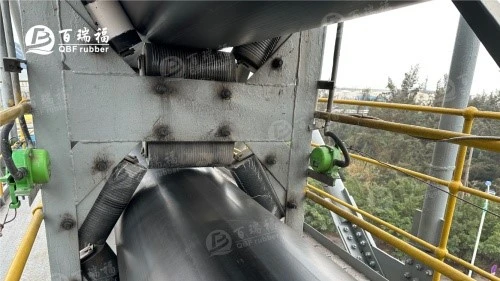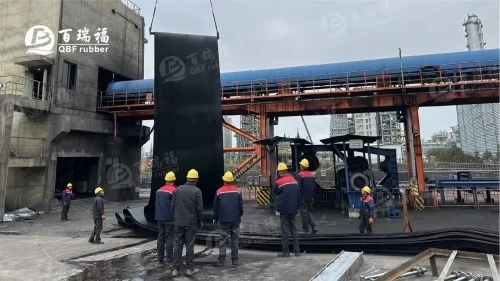

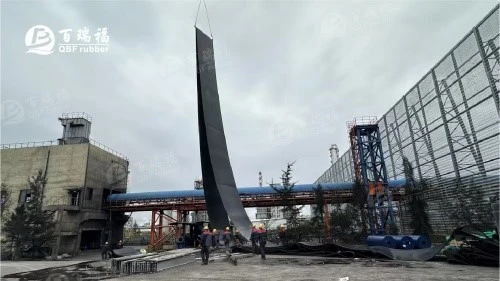
Our field team has finished a pipe belt conveyor installation at Huayi Group's chemical production site, taking the job from the first site survey through to commissioning under one contract.
The work covered four steps: checking the existing conveyor on site, selecting and making the pipe conveyor belt, splicing it in place together with the mechanical installation, and running commissioning in stages.
Why a pipe belt on a chemical site
The belt rolls into a closed tube, so the material stays inside from the loading point to the discharge. On a chemical plant that means less spillage along the route, less dust in the working area and no contamination of the product in transit. The tube also bends, so the line can follow the plant layout instead of the layout being rebuilt around a straight conveyor.
Survey before specification
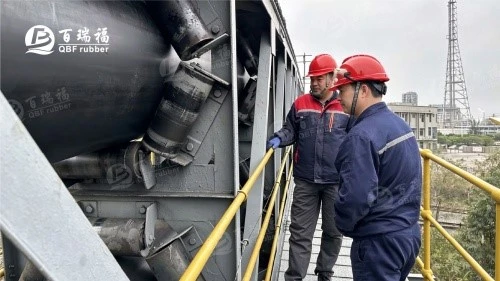
Technicians were on site before the belt was ordered. They checked the existing structure, the space available along the route, the material and the loads it would carry, and noted where operation could go wrong. The belt construction and the rubber compound were chosen from those readings, not from a catalogue default.
Installation and start-up
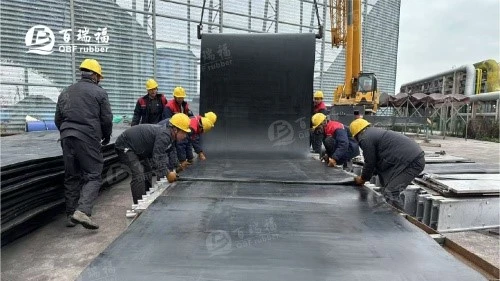
Certified technicians did the splicing, the idler alignment and the mechanical assembly, and kept to the agreed timetable. Commissioning ran stage by stage rather than as a single switch-on. The belt now forms a stable tube and runs at the pace the production line needs.
"Most customers can buy a belt. What slows a project down is the gap between the belt supplier, the installer and the commissioning team. Here one team covers all three, so the site deals with one schedule and one point of responsibility," said our Technical Director.
The same scope is available for new conveyors, belt replacement and retrofits at chemical, mining, port, steel and power sites.