

For a distributor, a coal-mine belt order is won - or lost - at selection. Translate the end user's working conditions into the right specification and the belt runs for years; miss one parameter and you spend the next two years handling after-sales claims. This guide walks through the selection in five steps, points out where low-cost suppliers quietly cut corners at each step, and ends with a checklist you can send straight to a manufacturer.
The failures that trace back to a wrong selection are predictable: cover puncture from sharp lump coal, static ignition from high surface resistance, flame spread after frictional ignition, and splice separation from poor cord adhesion. Each maps to a number you can verify at quotation stage - which is exactly what the five steps below do.

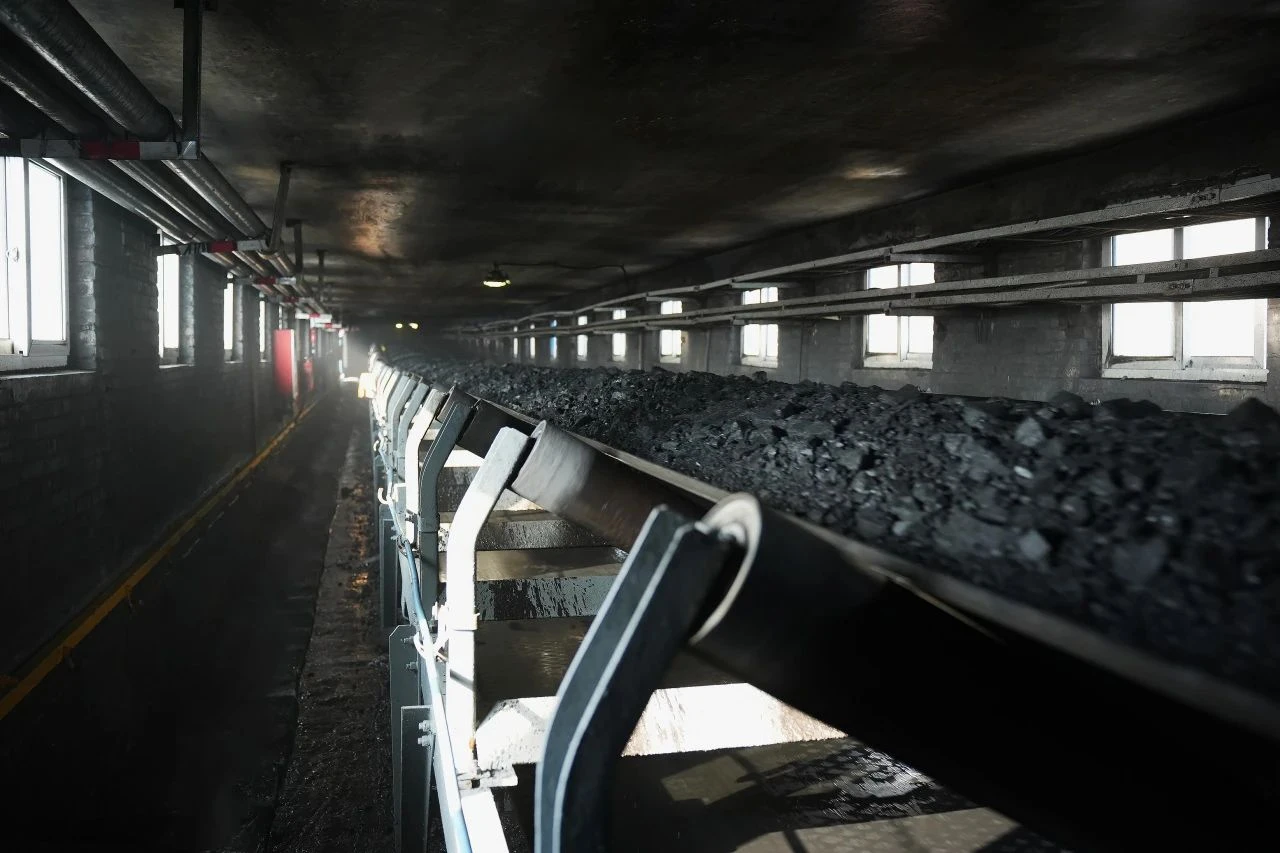
Step 1 - Match the Belt to the Duty
Selection starts with the site, not the catalogue. Let the duty decide which properties are non-negotiable:
|
Working condition |
Selection priority |
What to write into the spec |
|
Main inclined haulage drift - 8–18°, lump up to 300 mm, 800–3,000 tph |
Impact resistance, splice fatigue life |
Top cover 8–12 mm; impact-resistant compound; high-efficiency splice design |
|
Longwall panel transfer - continuous surge loading, coal dust in suspension |
Anti-static and flame safety |
Full test-package evidence (Step 5); surface resistance data |
|
Coal preparation plant feed and gangue discharge - wet, abrasive |
Cover abrasion resistance |
Abrasion loss ≤150 mm³ as a purchase specification |
|
Surface stockpile reclaim - sunlight, rain, cyclic tension |
Ageing resistance |
UV- and ozone-resistant cover compound |
Our belt is built on one carcass platform configured per duty - enhanced impact covers, abrasion compounds or UV/ozone protection - so you quote a single series instead of four different products.
Step 2 - Select the ST Grade from Tension, Not Tonnage
This is the most common and most expensive selection error. The ST rating follows the belt tension, which comes from conveyor length, lift height and start-up conditions. Tonnage alone does not define it: the same 1,800 tph can sit at ST1600 on a short, low-lift drift and need ST3150 on a 3 km inclined haulage. Under-specify and cords break; over-specify and the client pays for strength it never uses.
Practical guidance: for underground longwall haulage, ST2000–ST3150 covers most duties; anything outside that window needs a proper tension calculation. Send us the center-to-center length and total lift and we will run the calculation and confirm the grade before you commit a price. Our range covers ST630–ST7500 in full, so the calculation - not the catalogue - decides what you buy.
Step 3 - Set Belt Width and Speed Together
Width and speed are one decision, not two. For the same throughput, a wider belt running at moderate speed typically delivers 25–40 % longer cover life than a narrow belt running fast - the narrow-fast option is cheaper to buy and more expensive to run. Favor wider-and-slower where the material is lumpy, dusty or wet, and at transfer points with a high drop.
Step 4 - Specify the Cover Compound - and Its Tolerance
The cover is where a coal-mine belt actually dies, so pin the compound down in the purchase order:
• Performance: tensile strength ≥15.0 MPa, elongation at break ≥350 %, abrasion loss ≤200 mm³ (specify ≤150 mm³ for heavy-impact sites), and change within ±25 % after ageing at 70 °C × 168 h.
• Thickness: top cover 6–12 mm in impact zones, bottom cover 4–8 mm.
• Tolerance: "no upper deviation, lower deviation −0.5 mm". Belt thickness has no upper limit, so this one line is what stops a supplier quietly shaving 2 mm off the top cover - the classic hidden downgrade.
Step 5 - Verify the Safety Package and the Splice
Two areas where a certificate is not enough: ask for numbers and reports.
|
Failure risk |
What to verify |
MT/T 668-2019 acceptance criterion |
|
Static ignition |
Surface resistance |
Arithmetic mean of top and bottom covers ≤3.0 × 10⁸ Ω |
|
Flame spread |
Drum friction, alcohol blowlamp, propane gallery |
No flame or glow, drum surface ≤325 °C; afterflame and afterglow ≤3.0 s with cover intact, ≤5.0 s stripped (single values ≤10.0 s / ≤15.0 s); undamaged length ≥600 mm |
|
Cover wear |
Cover compound |
As Step 4 |
|
Splice separation |
Cord adhesion and splice efficiency |
Cover-to-core adhesion ≥10 N/mm; cord pull-out adhesion grade-dependent (≥130 N/mm for ST2500 before ageing); splice strength 90 % / 85 % / 80 % of belt rating by splice step count; 10,000 dynamic cycles without failure |
Dealer tip: many low-cost products pass the small-scale blowlamp test but fail the full-scale propane gallery test. Ask for the gallery report specifically, not just a certificate.
Export Standards at a Glance
For cross-border orders the destination standard outweighs the Chinese MA mark, which is legally valid only inside China. Match the approval to the project destination:
|
Standard |
Region |
Core requirement |
|
EN 14973 |
EU, underground mines |
Hazard-based classes A, B1, B2, C1 and C2. Class C1 (combustible dust): afterflame ≤10 s per specimen and ≤18 s per group of six with covers intact; surface resistance ≤300 MΩ |
|
ISO 340 |
Global, general use |
Afterflame ≤15 s per specimen, six specimens <45 s in total, no re-ignition under airflow |
|
MSHA Part 14 |
US, underground coal mines |
BELT method: about 5 minutes of flame exposure, each specimen must retain an undamaged section across its full width |
|
EN ISO 284 |
Global |
Surface resistance test method, limit ≤300 MΩ - consistent with MT/T 668-2019 |
The 10-Item Checklist for an Accurate Quotation
Collect these from the mining end user before approaching any manufacturer - it prevents wrong-grade selection and repeated quotation revisions:
• Conveyed material and bulk density (t/m³)
• Rated and peak surge throughput (tph)
• Design belt speed (m/s)
• Conveyor inclination angle and total lift height (m)
• Total horizontal center-to-center length (m)
• Maximum lump size of material (mm)
• Working site: underground / open pit / coal preparation plant
• Ambient temperature range (°C)
• Drive and tail pulley diameters (mm)
• Required standards and certifications (state the certificate type)
Send the completed list to our technical team and you will receive a specification-grade proposal - belt construction, cover configuration and price - rather than a bare price per meter.
FAQ 常见问题
Q: Is the Chinese MA safety mark accepted for overseas mining projects?
A: No. The MA mark is legally valid only within China. For export orders the belt must carry the approval required at the destination - for example EN 14973, ISO 340 or MSHA Part 14.
Q: Can cold-bonded splices replace hot-vulcanized splices on steel-cord flame-retardant belts?
A: Not for high-tension underground coal-mine duty. Cold-bonded joints have poor dynamic fatigue performance and tend to pull out under cyclic load. Hot vulcanization is the only acceptable method on critical mine conveyor lines.
Q: What is the difference between the alcohol blowlamp test and the propane gallery test?
A: The blowlamp test is a small-scale laboratory screen; the propane gallery is a full-scale simulation of a real underground fire. A belt that passes only the blowlamp test gives no assurance in an actual mine fire.
Q: How do I choose the ST strength grade - from conveying capacity (tph) alone?
A: No. ST grade follows the belt tension, which depends on conveyor length, lift height and start-up conditions. Tonnage alone cannot define it .
Q: Why does surface resistance matter for underground belts?
A: Excessive resistance lets static charge build up on the belt surface, and a single discharge spark can ignite a methane–coal-dust mixture in a confined underground tunnel.
Q: Can the same belt be used underground and on surface stockpiles?
A: The base construction can be the same. For surface duty, UV- and ozone-resistant cover compounds should be added to prevent sunlight cracking and premature aging .
Get in Touch
If you have a project requirement or a technical question about steel-cord flame-retardant conveyor belts, send us your operating parameters. Our team will come back with a tailored product solution and a competitive quotation.
Email: sunny@bestfriendrubber.com
WhatsApp / Tel: +86 139 6972 9233
Inquiry form: https://www.qbfrubber.com/inquiry
Product page: Mining Steel Cord Belt - https://www.qbfrubber.com/specialised-conveyor-belt/steel-cord-conveyor-belt/mining-steel-cord-belt.html


