

Can sidewall cleated belts be cut to custom lengths?
As a supplier of Sidewall Cleated Belts, I often encounter inquiries from customers regarding the possibility of cutting these belts to custom lengths. This is a crucial question, especially for those with unique conveyor system requirements. In this blog, I'll delve into the technical aspects, practical considerations, and benefits of custom - length cutting of sidewall cleated belts.
Technical Feasibility
Sidewall cleated belts, such as the Sidewall Cleated Belt, are engineered with specific structures. The sidewalls and cleats are integrated into the base belt to provide efficient material handling, especially for conveying materials at steep angles. Technically, these belts can be cut to custom lengths.
The base material of sidewall cleated belts is usually a high - strength rubber compound or a fabric - reinforced rubber. The cutting process depends on the belt's composition. For belts with a simple rubber structure, traditional cutting tools like sharp knives or saws can be used. However, for fabric - reinforced belts, more precision is required. Specialized cutting equipment, such as laser cutters or water jet cutters, is often employed. These tools can make clean cuts without damaging the fabric reinforcement, ensuring the integrity of the belt.
When cutting the sidewall cleated belts, it's essential to consider the position of the cleats and sidewalls. The cleats are designed at specific intervals to optimize material handling. Cutting the belt should be done in a way that doesn't disrupt the cleat pattern. This might involve measuring and marking the cutting point carefully to ensure that the cleats remain evenly spaced after cutting.
Practical Considerations
- Strength and Durability: One of the main concerns when cutting sidewall cleated belts is the impact on their strength and durability. Any cut in the belt can potentially weaken its structure. To mitigate this, proper jointing techniques are crucial after cutting. For example, vulcanization is a common method used to join the cut ends of the belt. Vulcanization creates a strong bond between the belt ends, restoring much of the original strength of the belt.
- Compatibility with Conveyor Systems: Custom - cut sidewall cleated belts need to be compatible with the existing conveyor systems. This includes considerations such as the belt's width, the height of the sidewalls, and the pitch of the cleats. Any mismatch can lead to operational issues, such as material spillage or belt slippage. Before cutting the belt, it's necessary to have detailed specifications of the conveyor system to ensure a proper fit.
- Cost - effectiveness: Cutting sidewall cleated belts to custom lengths can have cost implications. While it may seem more cost - effective to cut a standard - length belt to a shorter length rather than buying a pre - cut belt of the exact size, there are additional costs involved. These include the cost of cutting equipment (if not already available), the cost of jointing materials, and the labor cost for the cutting and jointing process. However, in many cases, the ability to use a standard belt and cut it to the required length can still result in overall cost savings, especially for large - scale projects.
Benefits of Custom - length Cutting
- Flexibility in Design: Custom - length cutting provides greater flexibility in conveyor system design. Customers can design conveyor systems of any length to fit their specific factory layouts or production processes. This is particularly useful in industries where space is limited or where complex conveyor routes are required.
- Reduced Waste: By cutting sidewall cleated belts to custom lengths, the amount of waste material can be significantly reduced. Instead of using a standard - length belt that may be longer than needed, a belt can be cut precisely to the required length, minimizing the leftover material.
- Quick Turnaround: In some cases, custom - length cutting can result in a quicker turnaround time compared to ordering a pre - cut belt. If a customer has an urgent need for a belt of a specific length, cutting an existing belt can be done much faster than waiting for a new belt to be manufactured to the exact size.
Specialized Sidewall Cleated Belts
In addition to the standard sidewall cleated belts, we also offer specialized options like the Anti - stick Sidewall Conveyor Belt and the High Angle Conveyor Belt. These belts can also be cut to custom lengths, but they require even more attention during the cutting process.

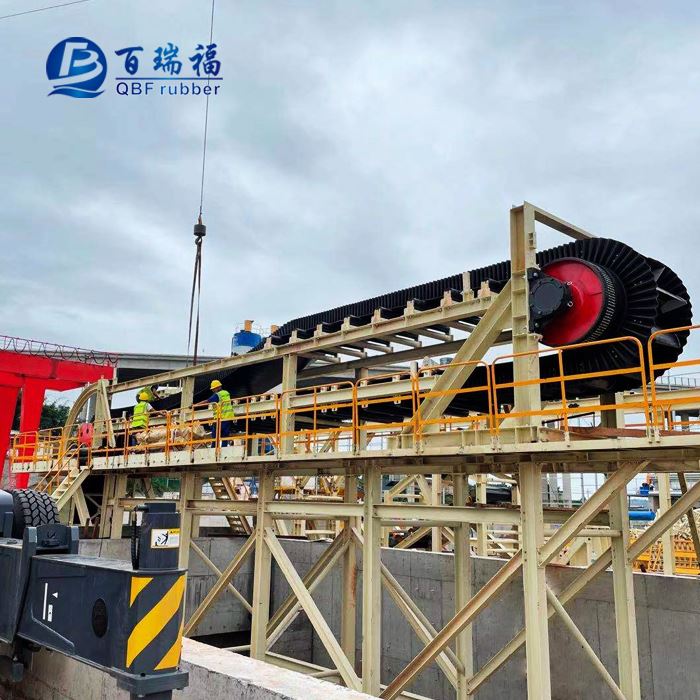
The anti - stick sidewall conveyor belt has a special coating to prevent materials from sticking to the belt surface. When cutting this type of belt, care must be taken not to damage the anti - stick coating. Specialized cutting techniques may be required to ensure that the coating remains intact after cutting.
The high - angle conveyor belt is designed for steep - angle conveying. The sidewalls and cleats on this belt are often higher and more robust than those on standard belts. Cutting a high - angle conveyor belt requires precise measurement and cutting to maintain the belt's ability to handle materials at steep angles.
Conclusion
In conclusion, sidewall cleated belts can indeed be cut to custom lengths. With the right technical knowledge, proper cutting equipment, and appropriate jointing techniques, custom - length cutting is a feasible and beneficial option for many customers. Whether it's for optimizing conveyor system design, reducing waste, or achieving a quick turnaround, the ability to cut sidewall cleated belts to custom lengths offers significant advantages.
If you're interested in custom - length sidewall cleated belts or have any questions about our products, we invite you to contact us for a detailed discussion. Our team of experts is ready to assist you in finding the best solution for your conveyor system needs.
References
- Belt Conveyor Handbook: A comprehensive guide to belt conveyor technology, including information on belt cutting and jointing techniques.
- Rubber and Plastic Technology Journals: Publications that often feature research on the properties and processing of rubber - based conveyor belts.
- Industry standards and guidelines related to conveyor belt manufacturing and installation.


