

Hey there! As a sidewall belt supplier, I often get asked a bunch of questions about our products. One question that pops up quite a bit is, "Can sidewall belts be used for conveying hot materials?" Well, let's dive right into it and find out.
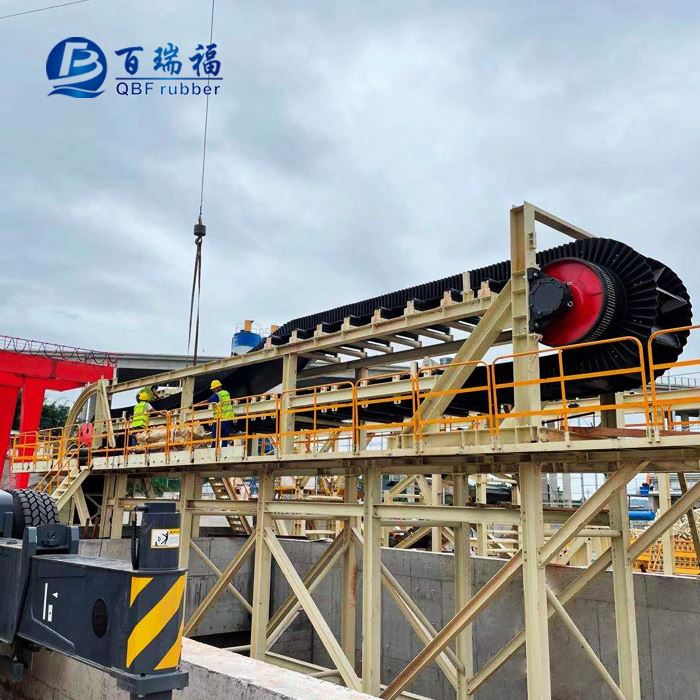
First off, let's understand what sidewall belts are. Sidewall belts, like the Sidewall Cleated Belt, are a type of conveyor belt that have vertical sidewalls and cleats. These features are super handy as they help contain the materials being transported, especially when you're dealing with inclined or vertical conveying. They're used in a whole bunch of industries, from mining and construction to agriculture and food processing.
Now, when it comes to conveying hot materials, things get a bit more complicated. Hot materials can vary in temperature, and the ability of a sidewall belt to handle them depends on several factors.
One of the most important factors is the type of rubber used in the belt. Different rubbers have different heat resistance levels. For example, some belts are made with natural rubber, which is great for general - purpose applications but doesn't handle high temperatures very well. On the other hand, synthetic rubbers like neoprene or EPDM (Ethylene Propylene Diene Monomer) have better heat resistance. Neoprene can typically withstand temperatures up to around 80 - 90°C (176 - 194°F), while EPDM can handle temperatures up to about 120 - 150°C (248 - 302°F).
Another factor is the belt's construction. A well - constructed sidewall belt with proper reinforcement can handle heat better. The reinforcement materials, such as polyester or steel cords, play a crucial role. Polyester has good dimensional stability but may start to degrade at relatively high temperatures. Steel cords, on the other hand, are more heat - resistant and can maintain the belt's strength even when exposed to hot materials.
Let's talk about the potential problems that can occur when using sidewall belts for hot materials. One major issue is belt degradation. High temperatures can cause the rubber to harden, crack, or even melt. This not only shortens the belt's lifespan but can also lead to material spillage. If the sidewalls or cleats start to break down, the materials being conveyed won't be properly contained, which can create a mess in your workplace and reduce the efficiency of your conveyor system.
Heat can also affect the adhesion between the different layers of the belt. If the adhesion fails, the belt may delaminate, which is a serious problem. Delamination can cause the belt to split apart, and you'll end up having to replace the entire belt, which is both time - consuming and expensive.
However, don't lose hope! There are ways to use sidewall belts for conveying hot materials successfully. One option is to use a Vertical Conveyor Belt specifically designed for high - temperature applications. These belts are made with heat - resistant rubbers and proper reinforcements. They're engineered to withstand the thermal stress caused by hot materials.
You can also take some preventive measures. For example, you can install a cooling system near the conveyor to reduce the temperature of the hot materials before they come into contact with the belt. This can significantly extend the belt's lifespan. Additionally, regular maintenance is crucial. Inspect the belt regularly for signs of wear and tear, and replace any damaged parts promptly.
Now, let's look at some industries where sidewall belts are used to convey hot materials. In the mining industry, for instance, they're used to transport hot ores. The ores can be quite hot right after they're mined, and a well - designed sidewall belt can handle the job. In the cement industry, sidewall belts are used to move hot clinker, which is a key ingredient in cement production. The high temperatures involved in these industries require belts that can withstand the heat.

In the food industry, although the temperatures may not be as extreme as in mining or cement, there are still situations where sidewall belts need to convey hot food products. For example, after baking or cooking, the food may still be warm when it's being transported on the conveyor. Using an Anti - stick Sidewall Conveyor Belt can be a good option here. These belts not only resist heat but also prevent the food from sticking to the belt, which is important for maintaining hygiene and product quality.
So, to answer the question, yes, sidewall belts can be used for conveying hot materials, but it's not a one - size - fits - all situation. You need to choose the right belt for the job, considering factors like the temperature of the materials, the type of industry, and the specific requirements of your conveyor system.
If you're in the market for sidewall belts for conveying hot materials, don't hesitate to reach out. We're here to help you find the perfect solution for your needs. Whether it's a custom - designed belt or a standard high - temperature belt, we've got you covered. Let's have a chat and figure out the best way to keep your conveyor system running smoothly with hot materials.
References:
- "Conveyor Belt Technology Handbook" - A comprehensive guide on conveyor belt design, materials, and applications.
- Industry research papers on high - temperature conveyor belt performance.


