


For mining operations, ports, cement plants, and large bulk material handling facilities, increasing conveyor capacity is not always as simple as raising belt speed. When production expands or material volumes exceed the existing system's capacity, operators must decide whether to increase belt width, adjust conveyor speed, or redesign the conveying system.
Super-wide conveyor belts offer an option for transporting large volumes of bulk materials, particularly where high throughput, large material sizes, or operating speed limitations make conventional belt configurations less suitable. However, a wider belt also places different demands on pulleys, idlers, supporting structures, and drive systems.
For plant managers and procurement engineers, the important question is not simply how wide a conveyor belt can be manufactured, but whether additional width provides a practical and economical solution for the required conveying capacity.
This article examines when super-wide belts should be considered, how they compare with higher-speed conveyor systems, and which technical factors buyers should evaluate before placing an order.
What Makes a Conveyor Belt Super-Wide?
A super-wide conveyor belt is a belt manufactured with an unusually large width to meet the requirements of a particular conveying system. There is no single universally applicable width threshold that separates standard belts from super-wide belts, as available sizes and terminology vary between manufacturers and applications.
In industrial bulk handling, wider belts are commonly considered when conventional belt widths cannot deliver the required capacity under acceptable operating conditions. Their applications may include mine overburden removal, high-capacity ore handling, port terminals, and large-scale aggregate transportation.
Unlike standard replacement belts, super-wide conveyor belts often require more detailed coordination between the belt manufacturer and conveyor system designer. Belt construction, width tolerance, troughing characteristics, splice requirements, and transportation dimensions must all be evaluated against the project specifications.
When Should Plants Consider Super-Wide Conveyor Belts?
The decision to increase belt width should begin with the operating limitations of the existing or proposed conveyor system. In many projects, a wider belt becomes attractive when production requirements increase but raising belt speed would introduce additional problems.
1.When Production Capacity Exceeds the Existing Conveyor Design
Mining and bulk handling facilities often increase production by upgrading crushers, expanding processing lines, or increasing material throughput. However, the original conveyor may not have sufficient carrying capacity to handle the additional material without excessive loading.
If the belt is already operating near its acceptable loading cross-section, increasing the feed rate may cause material spillage, unstable loading, and excessive stress on conveyor components. A wider belt can provide a larger carrying cross-section while allowing the system to operate at an appropriate speed, provided the associated equipment is designed for the increased load.
2.When Increasing Conveyor Speed Creates Operational Problems
Increasing belt speed is one way to improve conveying capacity, but higher speed can also affect loading and discharge conditions. In systems handling abrasive materials, large rocks, or dusty products, faster operation may increase transfer-point challenges, material scattering, and component wear.
For these applications, increasing belt width may provide additional capacity without requiring the same increase in speed. This approach can be particularly useful when loading chutes, discharge equipment, or material characteristics impose practical speed limitations.
3.When Handling Large or Irregularly Sized Materials
Conveyors transporting large ore lumps, crushed rock, and other irregular materials require sufficient belt width to accommodate material size and maintain appropriate edge clearance. A belt that is too narrow can cause unstable loading, spillage, and repeated contact between conveyed material and conveyor structures.
Wider belts provide additional space for bulky materials, but maximum lump size must still be checked against the selected loading profile and conveyor geometry. Increasing width does not eliminate the need for proper impact protection, chute design, or material distribution.
Table 1. Industrial Applications Where Wider Conveyor Belts May Be Beneficial
|
Industry |
Typical Operating Requirement |
Potential Benefit of a Wider Belt |
|
Open-Pit Mining |
High-volume ore and overburden transportation |
Increased carrying cross-section for large material flows |
|
Port Bulk Terminals |
Continuous handling of coal, iron ore, and other bulk cargo |
Higher throughput without relying entirely on increased speed |
|
Cement Plants |
Large-volume limestone and raw material handling |
Additional capacity for expanded production lines |
|
Quarrying and Aggregates |
Transportation of crushed stone and large aggregate |
More carrying space for bulky, irregular materials |
|
Power Plants |
Continuous coal or bulk fuel supply |
Increased material flow where existing conveyor capacity is insufficient |
|
Large Stockyards |
High-volume material transfer and distribution |
Greater carrying capacity for appropriately designed conveyor systems |
The actual benefit depends on material bulk density, surcharge angle, belt speed, conveyor inclination, and the available loading cross-section. A wider belt should be selected only after these factors have been evaluated together.
How Does Belt Width Affect Conveyor Capacity?
Conveyor capacity is determined by the volume of material carried on the belt and the speed at which it moves. Belt width influences capacity because it affects the available material cross-sectional area, but the relationship also depends on troughing geometry and material properties.
For preliminary calculations, theoretical mass conveying capacity can be expressed as:
Q = 3,600 × A × V × ρ
Where Q is theoretical conveying capacity (t/h), A is loaded material cross-sectional area (m²), V is conveyor belt speed (m/s), and ρ is loose bulk density (t/m³).
This equation demonstrates that capacity can be increased by increasing the loaded cross-sectional area, belt speed, or both. However, the usable material area is not equal to the belt's full physical width and must account for appropriate edge clearance and loading geometry.
The following example compares three conveyor operating scenarios using a hypothetical material bulk density of 1.5 t/m³.
Table 2. Illustrative Conveyor Capacity Comparison
|
Operating Parameter |
Existing System |
Higher-Speed Option |
Wider-Belt Option |
|
Assumed loaded cross-sectional area (m²) |
0.17 |
0.17 |
0.23 |
|
Belt speed (m/s) |
3.0 |
4.0 |
3.0 |
|
Bulk density (t/m³) |
1.5 |
1.5 |
1.5 |
|
Calculated capacity (t/h) |
2,754 |
3,672 |
3,726 |
|
Capacity increase |
Baseline |
33.3% |
35.3% |
Note: These figures are mathematical examples based on assumed loading cross-sections. They are not actual QBF Rubber product capacities or verified project results. The wider-belt option assumes that the conveyor geometry can provide the specified larger loaded cross-section.
In this example, both upgrading belt speed and increasing the carrying cross-section raise theoretical capacity to more than 3,600 t/h. The wider-belt option achieves this without increasing belt speed, while the higher-speed option achieves a similar result without changing the assumed carrying area.
However, this does not automatically make the wider belt the better solution. The additional material load, belt mass, structural requirements, drive capacity, and installation costs must be considered before determining which option offers the best overall value.
Increasing Belt Width vs. Increasing Belt Speed: Which Is Better?
For a bulk handling plant planning a capacity upgrade, increasing width and increasing speed represent two different engineering approaches. Both can improve throughput, but they influence conveyor operation and investment requirements in different ways.
Increasing belt speed may be attractive when the existing conveyor has sufficient mechanical capacity, suitable loading and discharge equipment, and adequate drive performance. However, higher speeds can increase demands on belt tracking, loading control, cleaning systems, and rotating components.
Increasing belt width, on the other hand, provides additional carrying area at a given speed. This may be more suitable when material size or transfer-point limitations restrict higher-speed operation, although widening often requires significant mechanical modifications.
Table 3. Comparison of Two Conveyor Capacity Upgrade Methods
|
Evaluation Factor |
Increase Belt Width |
Increase Belt Speed |
|
Main capacity improvement |
Larger loaded cross-sectional area |
Faster material transportation |
|
Material handling |
Can accommodate a larger material cross-section |
Requires suitable material loading and discharge at higher speed |
|
Conveyor structure |
May require wider frames, idlers, pulleys, and chutes |
Existing width may be retained if components are speed-compatible |
|
Drive requirements |
Must account for additional load, belt weight, and system resistance |
Must verify motor power, drive speed, and mechanical limits |
|
Loading point |
Requires adjustment for the wider belt geometry |
Requires evaluation of increased material velocity |
|
Installation considerations |
May involve substantial equipment modification |
May be simpler if the existing system has sufficient design margin |
|
Main investment concern |
Belt and equipment replacement or modification |
Drive, component, and transfer-system upgrades |
For example, consider a mine planning to increase throughput while transporting large, abrasive ore. If the existing transfer chute already experiences impact damage and spillage, simply increasing conveyor speed may worsen its operating problems. A wider belt, combined with improved loading design, could be a more suitable solution.
Conversely, a plant with moderate material sizes, sufficient edge clearance, and a conveyor system designed for higher speeds may find that a speed adjustment is more economical than widening the entire conveyor.
The final choice should be supported by a complete engineering assessment rather than a comparison of belt prices alone.
What Technical Challenges Come with Super-Wide Conveyor Belts?
Although increasing belt width creates additional conveying capacity, it also changes how the conveyor system handles loads. Buyers should evaluate the complete installation rather than treating the belt as an independent replacement component.
Belt Strength and Carcass Construction
A wider conveyor can carry more material at the same speed, which may increase the distributed load along the conveying route. However, the required belt tensile strength must be calculated from the conveyor's effective tension, lift, resistance, acceleration, and operating conditions rather than belt width alone.
Fabric-reinforced and steel cord constructions may be considered according to the required tensile rating, conveyor length, pulley dimensions, and operating duty. The selected carcass must also provide suitable troughability and sufficient resistance to damage at loading points.
Pulley and Idler Compatibility
Wider belts require pulleys and supporting idlers with suitable dimensions and load capacities. The trough angle, idler arrangement, spacing, and transition distance should be checked to ensure the belt is adequately supported.
Insufficient support can lead to excessive sag, uneven material distribution, and tracking problems. For very wide and heavily loaded systems, alternative idler arrangements may also be considered to manage loading and belt deformation.
Belt Tracking and Material Distribution
Maintaining consistent belt alignment becomes particularly important in high-capacity conveyor systems. Uneven loading, misaligned idlers, and unsuitable transition geometry can cause the belt to move laterally, potentially damaging belt edges or conveyor components.
A wider belt does not automatically solve tracking problems. The loading system should distribute material appropriately, and the conveyor structure must maintain the alignment required for stable operation.
Manufacturing, Splicing, and Transportation
Super-wide belts can introduce additional challenges during manufacturing, handling, and installation. The manufacturer must consider production equipment capabilities, dimensional tolerances, belt roll dimensions, and the required splice arrangement.
Large belt rolls may also require special transportation planning depending on their width, diameter, and weight. For overseas projects, these logistics should be reviewed before confirming production and delivery arrangements.
What Should Buyers Confirm Before Ordering?
For large conveyor projects, a quotation based only on belt width and length is insufficient. Procurement teams should provide the conveyor manufacturer's design requirements or existing system parameters so the belt supplier can assess material suitability and manufacturing feasibility.
Table 4. Procurement Checklist for Super-Wide Conveyor Belts
|
Technical Parameter |
Information Required |
Procurement Purpose |
|
Belt width |
Required width in mm |
Confirm manufacturing feasibility and equipment compatibility |
|
Belt length |
Required total length in m |
Determine supply quantity and roll arrangement |
|
Conveying capacity |
Normal and peak throughput in t/h |
Evaluate required carrying capacity |
|
Material properties |
Material type, bulk density, maximum lump size |
Assess loading requirements and cover selection |
|
Belt speed |
Operating speed in m/s |
Verify capacity and operating conditions |
|
Conveyor length and lift |
Horizontal distance, elevation change, inclination |
Support belt tension calculations |
|
Belt construction |
Required EP/NN or ST rating |
Determine carcass type and tensile strength |
|
Cover specification |
Top/bottom cover thickness and rubber grade |
Match wear, temperature, and environmental conditions |
|
Pulley and idler dimensions |
Pulley diameters, face widths, trough angles |
Verify mechanical compatibility |
|
Splice requirements |
Splice type, installation method, and acceptance criteria |
Support reliable belt installation |
|
Shipping requirements |
Destination, roll size limits, delivery terms |
Plan packing and international transportation |
For existing conveyor upgrades, providing technical drawings and photographs of the installed structure can help identify potential compatibility issues. Buyers should also confirm the required test reports, inspection arrangements, and dimensional tolerances before approving production.
When Is a Super-Wide Conveyor Belt Not the Best Choice?
A wider belt is not always necessary for improving plant productivity. If the existing conveyor has unused carrying capacity, operational adjustments such as improved loading distribution or suitable speed optimization may be more economical than replacing the belt and associated equipment.
Space limitations can also make widening impractical. Existing conveyor galleries, support frames, transfer chutes, and access platforms may not accommodate additional belt width without substantial structural changes.
In some applications, the main limitation is not belt capacity at all. Crushers, feeders, screens, downstream conveyors, or discharge systems may restrict overall production output. Increasing belt width will provide little benefit if these bottlenecks remain unresolved.
Therefore, plants should first determine whether the conveyor belt is the actual capacity constraint before investing in a super-wide replacement.
Our Project Support
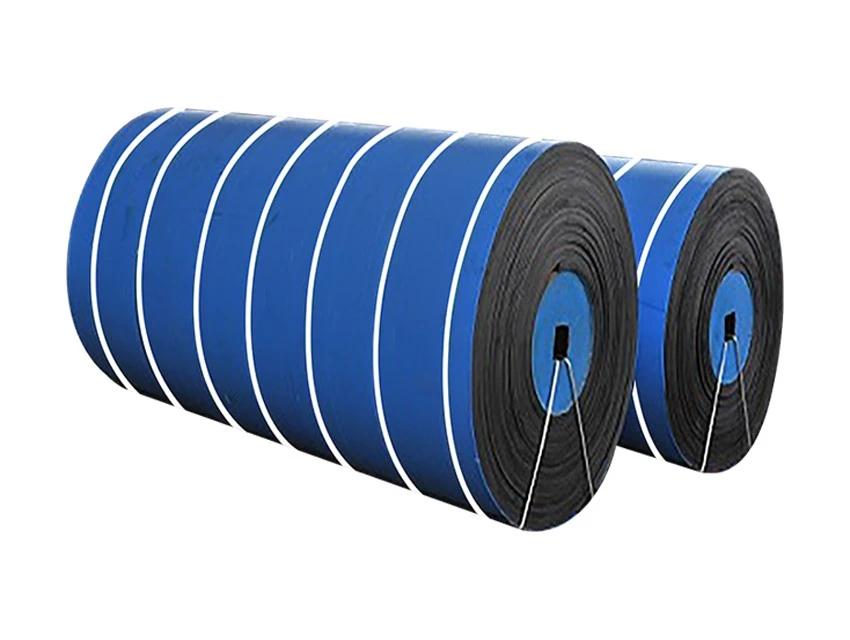
Qingdao Best Friend Rubber & Plastic Co., Ltd. provides customized super-wide conveyor belts and other heavy-duty belting solutions for mining, ports, cement production, and large-scale bulk material handling projects. When evaluating a conveyor capacity upgrade, the selection process involves more than increasing belt width. Belt construction, required tensile strength, material loading, pulley compatibility, and installation requirements must be considered together to ensure the proposed product matches the conveyor system. Our team supports buyers in reviewing these specifications and identifying suitable belting options for their project requirements.
If you are planning a new Super Wide Conveyor Belt or upgrading an existing system, send us your required throughput, belt dimensions, conveying material, belt speed, conveyor length, elevation change, and technical drawings. Our team can review the available information, recommend suitable belt specifications, and prepare a formal quotation based on your project requirements.
Email: sunny@bestfriendrubber.com
WhatsApp / Tel: +86 139 6972 9233
Inquiry form: https://www.qbfrubber.com/inquiry
Product page:https://www.qbfrubber.com/specialised-conveyor-belt/super-wide-conveyor-belt/
FAQ
Q: Does a wider conveyor belt always increase conveying capacity?
A: A wider belt can increase the available carrying cross-section, but the actual capacity depends on belt speed, material bulk density, surcharge angle, and idler geometry. The conveyor must also have sufficient structural and drive capacity to handle the increased load. A width increase alone does not guarantee a proportional increase in production throughput.
Q: Can an existing conveyor be upgraded with a super-wide belt?
A: Yes, but only when the conveyor structure and supporting equipment can accommodate the required width. Pulleys, idlers, frames, loading chutes, transitions, and take-up arrangements must be checked before installation. Some systems may require substantial modifications, making a complete conveyor upgrade more practical.
Q: Are super-wide conveyor belts suitable for long-distance mining applications?
A: They can be suitable for long-distance applications when properly engineered. However, the required belt construction and strength depend on conveyor length, elevation, material load, drive configuration, and tension calculations. For high-tension installations, steel cord reinforcement may be appropriate, subject to project design requirements.
Q: Is a wider belt more economical than increasing conveyor speed?
A: The more economical option depends on the existing system and the scale of the upgrade. Increasing speed may require fewer structural modifications in some installations, while a wider belt may avoid operational problems associated with excessive speed. Buyers should compare total project costs, including equipment modifications, energy consumption, maintenance, and expected downtime.
Q: Can super-wide conveyor belts be customized for specific projects?
A: Yes. Belt width, construction, tensile rating, cover properties, and other specifications can be customized within the manufacturer's production capabilities. Buyers should provide complete project drawings and operating requirements so the supplier can confirm feasible dimensions, suitable materials, and delivery arrangements before quoting.


