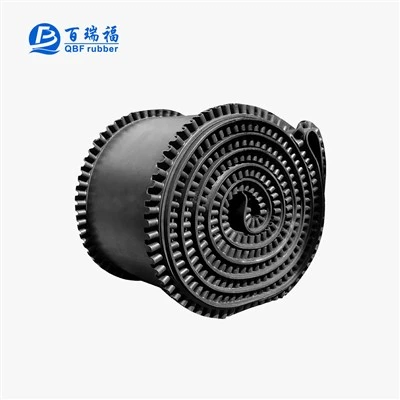
Hey there! As a supplier of Sidewall Conveyor Belts, I often get asked about the flexibility of these amazing pieces of equipment. So, let's dive right in and explore what makes sidewall conveyor belts so flexible.
First off, what exactly are sidewall conveyor belts? Well, they're a type of conveyor belt that has vertical sidewalls attached to the base belt. These sidewalls help to contain and transport materials at steep angles, even vertically in some cases. They're used in a wide range of industries, from mining and agriculture to food processing and manufacturing.
One of the key aspects of the flexibility of sidewall conveyor belts is their ability to handle different types of materials. Whether you're dealing with fine powders, large rocks, or even sticky substances, sidewall conveyor belts can get the job done. The sidewalls prevent the material from spilling off the belt, allowing for efficient and reliable transportation. For example, in a mining operation, sidewall conveyor belts can transport ore up steep inclines without losing any of the valuable material.
Another factor that contributes to the flexibility of sidewall conveyor belts is their adaptability to different conveyor configurations. They can be used in straight runs, curves, and even multi - plane setups. This means that they can be easily integrated into existing conveyor systems or designed to fit the specific layout of a new facility. For instance, if you have a factory with limited space, a sidewall conveyor belt can be configured to make sharp turns and navigate around obstacles.
The flexibility also extends to the angles at which sidewall conveyor belts can operate. You've got Steep Inclined Conveyor Belt that can handle angles of up to 90 degrees in some cases. This is a huge advantage when you need to move materials vertically or at a very steep incline. In a high - rise building construction site, a Vertical Conveyor Belt can be used to transport construction materials from the ground floor to the upper levels quickly and safely.
High Angle Conveyor Belts are also a great example of the flexibility of sidewall conveyor belts. These belts are designed to operate at angles greater than the typical flat conveyor belts. They're ideal for applications where space is limited or where you need to move materials over a short distance but at a steep angle. Check out High Angle Conveyor Belt for more details on how these belts can benefit your operations.


The construction of sidewall conveyor belts also plays a role in their flexibility. The sidewalls are usually made of a flexible rubber or PVC material that can bend and flex as the belt moves around pulleys and through curves. This allows the belt to maintain its integrity and continue to function effectively even in challenging conditions. The base belt is also designed to be flexible, with a variety of materials available to suit different applications. For example, in a food processing plant, a belt made of a food - grade material can be used to ensure the safety and quality of the products being transported.
In addition to their physical flexibility, sidewall conveyor belts are also flexible in terms of maintenance and customization. They're relatively easy to maintain, with simple cleaning and inspection procedures. And if you have specific requirements for your conveyor system, such as a particular belt width, sidewall height, or conveyor speed, we can customize the sidewall conveyor belt to meet your needs. This means that you can get a conveyor belt that's tailored to your exact application, rather than having to make do with a one - size - fits - all solution.
Let's talk about the cost - effectiveness of sidewall conveyor belts in relation to their flexibility. Because they can handle a wide range of materials and operate at different angles and configurations, they can often replace multiple conveyor systems. This can lead to significant cost savings in terms of equipment purchase, installation, and maintenance. For example, instead of using a series of flat conveyor belts and elevators to move materials up a steep incline, a single sidewall conveyor belt can do the job more efficiently and at a lower cost.
Now, you might be wondering how to choose the right sidewall conveyor belt for your application. Well, there are a few things to consider. First, think about the type of material you'll be transporting. Different materials have different properties, such as weight, size, and abrasiveness, which can affect the choice of belt material and sidewall design. Second, consider the angle and distance of the conveyor run. Steeper angles and longer distances may require a more robust belt and sidewall construction. Finally, think about any special requirements you may have, such as food - grade materials or explosion - proof features.
As a supplier of sidewall conveyor belts, we're here to help you make the right choice. We have a team of experts who can assess your needs and recommend the best conveyor belt solution for your application. Whether you're a small business looking for a simple conveyor system or a large industrial operation in need of a complex, customized solution, we've got you covered.
If you're interested in learning more about sidewall conveyor belts or are ready to make a purchase, we'd love to hear from you. Just reach out to us, and we'll start the conversation. We can provide you with detailed product information, quotes, and even arrange for a demonstration if needed. Don't miss out on the flexibility and benefits that sidewall conveyor belts can offer your business.
In conclusion, the flexibility of sidewall conveyor belts is truly remarkable. From their ability to handle different materials and operate at various angles to their adaptability to different conveyor configurations and ease of customization, they're a versatile solution for a wide range of industries. So, if you're in the market for a conveyor belt that can meet your specific needs, look no further than sidewall conveyor belts.
References
- Industry research on conveyor belt applications
- Manufacturer's specifications for sidewall conveyor belts