

Hey there! As a supplier of Pipe Conveyor Belts, I often get asked about the installation clearances for these nifty pieces of equipment. So, I thought I'd take a moment to break it all down for you in this blog post.
First off, let's talk about why installation clearances matter. Pipe conveyor belts are used in a variety of industries, from mining to food processing, to transport materials in a closed loop. They offer a lot of advantages, like reduced spillage, less dust pollution, and the ability to navigate complex routes. But to make sure they work properly and last a long time, it's crucial to install them with the right clearances.
Horizontal Clearances
When it comes to horizontal clearances, you need to consider the space around the pipe conveyor belt. This includes the distance from the belt to any nearby structures, like walls, columns, or other equipment. The general rule of thumb is to leave at least 100 mm (about 4 inches) of clearance on either side of the belt. This gives the belt enough room to move freely without rubbing against anything, which can cause wear and tear.
But in some cases, you might need more clearance. For example, if the belt is going to be carrying large or heavy materials, you'll want to increase the clearance to 150 mm (about 6 inches) or more. This will prevent the materials from getting stuck between the belt and the surrounding structures.
Another thing to keep in mind is the alignment of the belt. The belt should be centered within the clearance space to ensure even wear and proper tracking. If the belt is off-center, it can cause uneven stress on the belt and lead to premature failure.
Vertical Clearances
Vertical clearances are just as important as horizontal clearances. You need to make sure there's enough space above and below the belt for it to operate smoothly. The minimum vertical clearance above the belt should be at least 200 mm (about 8 inches). This allows for any expansion or contraction of the belt due to temperature changes, as well as any movement caused by the material being transported.
Below the belt, you'll need to leave enough clearance for the return side of the belt. The return side of the belt is the part that comes back after delivering the material. It's usually not carrying any load, but it still needs enough space to move freely. A good rule of thumb is to leave at least 150 mm (about 6 inches) of clearance below the belt.
In addition to the minimum clearances, you also need to consider the height of the discharge point. The discharge point is where the material is released from the belt. You'll want to make sure there's enough space below the discharge point to accommodate the material without causing any blockages.
Clearances at Bends
Pipe conveyor belts often have to navigate bends in the route. When installing the belt at bends, you need to pay special attention to the clearances. The minimum clearance at bends should be the same as the horizontal and vertical clearances mentioned above. However, you might need to increase the clearance slightly to account for the additional stress on the belt at the bend.
The radius of the bend also plays a role in determining the clearances. A smaller bend radius will require more clearance than a larger bend radius. This is because the belt has to bend more sharply, which can cause it to rub against the surrounding structures.
Clearances for Maintenance and Inspection
Finally, you need to consider the clearances for maintenance and inspection. You'll want to make sure there's enough space around the belt to access it for cleaning, lubrication, and repairs. This means leaving enough clearance for workers to move around and use tools.
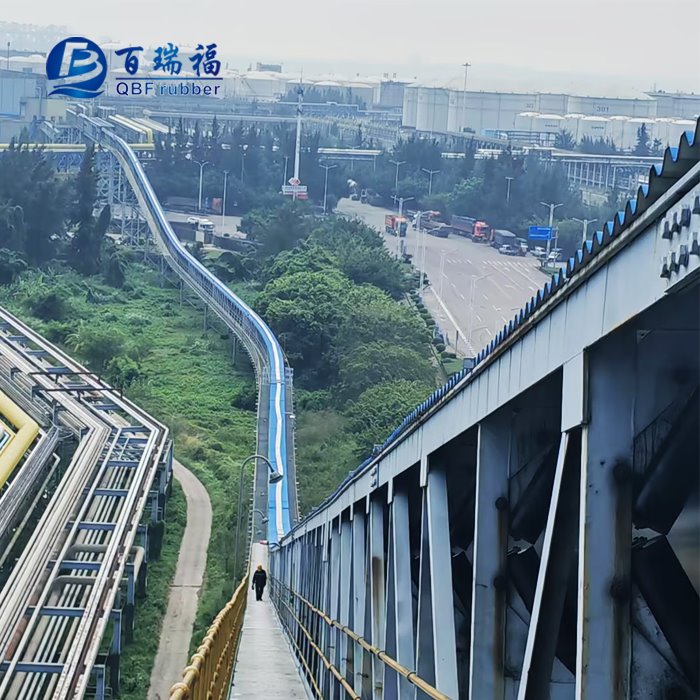
A good rule of thumb is to leave at least 600 mm (about 2 feet) of clearance around the belt for maintenance and inspection. This gives workers enough room to safely access the belt and perform any necessary tasks.
Conclusion
In conclusion, installation clearances are a crucial part of installing a pipe conveyor belt. By following the guidelines outlined above, you can ensure that your belt operates smoothly, lasts a long time, and minimizes the risk of breakdowns.
If you're in the market for a Tube Conveyor Belt, we're here to help. We offer a wide range of high-quality pipe conveyor belts that are designed to meet your specific needs. Whether you're in the mining, food processing, or any other industry, we have the expertise and experience to provide you with the right solution.
So, if you have any questions or would like to discuss your requirements, don't hesitate to get in touch. We'd love to hear from you and help you find the perfect pipe conveyor belt for your business.
References
- Conveyor Belt Handbook, various industry publications
- Manufacturer's installation guidelines for pipe conveyor belts


