

Conveyor belts are an essential part of many industries, from mining and agriculture to manufacturing and logistics. They are used to move materials from one place to another efficiently, saving time and labor costs. However, not all conveyor belts are created equal. In this blog post, we will explore the differences between high angle conveyor belts and regular conveyor belts, and why you might choose one over the other. As a supplier of High Angle Conveyor Belt, I have extensive experience with both types of conveyor belts and can provide valuable insights into their applications and benefits.
Design and Structure
Regular conveyor belts are typically flat and operate at relatively low angles, usually less than 20 degrees. They consist of a continuous loop of material, often made of rubber or PVC, that runs over a series of rollers. The material being transported sits on the top surface of the belt, and the movement of the belt carries it along. These belts are simple in design and are suitable for a wide range of applications where materials can be easily moved on a flat surface.
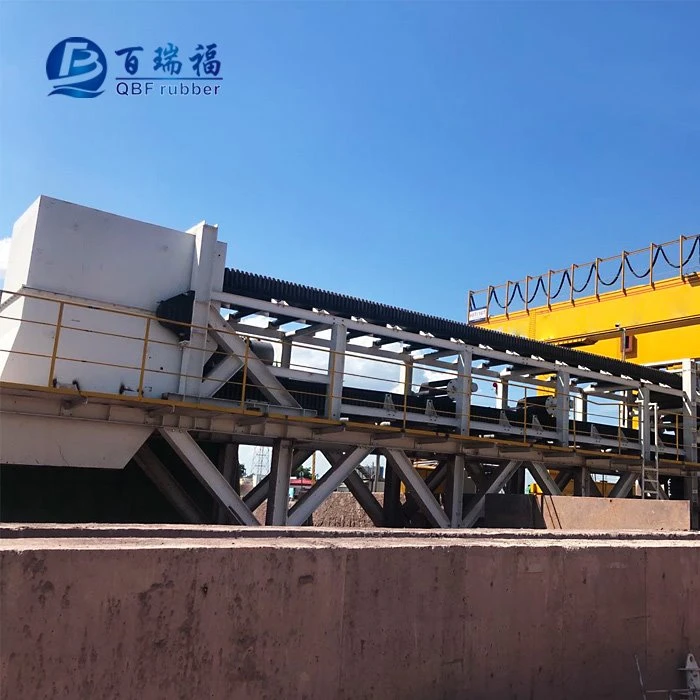
On the other hand, high angle conveyor belts are designed to transport materials at much steeper angles, often up to 90 degrees. To achieve this, they have a more complex structure. A high angle conveyor belt usually features sidewalls and cleats. The Sidewall Conveyor Belt is a common type of high angle conveyor belt. The sidewalls are vertical barriers along the edges of the belt that prevent the material from falling off the sides when the belt is inclined. The cleats are raised sections on the belt surface that help to hold the material in place and move it upwards. For example, the Sidewall Belt provides a reliable means of containing materials during high - angle transport, while the Sidewall Cleated Belt combines the features of sidewalls and cleats for enhanced performance.
Material Handling Capabilities
Regular conveyor belts are ideal for handling materials that are relatively easy to move and can stay on a flat surface. They work well with materials such as small parts, packaged goods, and some granular substances. For instance, in a food processing plant, regular conveyor belts can be used to transport boxes of cereals or canned goods from one processing stage to another.
High angle conveyor belts, however, are designed to handle more challenging materials. They are commonly used in industries where materials need to be transported vertically or at high angles, such as in mining and quarrying. In a mining operation, large amounts of ore, coal, or other minerals need to be moved from the mine shaft to the surface or between different levels of the processing plant. High angle conveyor belts, like the MOR Sidewall Conveyor Belt, can efficiently handle these heavy and bulky materials, even when the conveyor needs to be installed in a limited space. They can also handle loose, fine - grained materials that would otherwise slip off a regular conveyor belt at an incline.
Space Requirements
Regular conveyor belts usually require a relatively large footprint as they need to be laid out in a relatively flat or gently sloping manner to ensure proper material flow. In a factory, a long run of regular conveyor belts may be needed to transport materials over a certain distance, which can take up a significant amount of floor space.
High angle conveyor belts are a space - saving solution. Since they can transport materials vertically or at high angles, they can achieve the same material transfer distance in a much smaller area. This is particularly beneficial in industries where space is limited, such as in urban manufacturing plants or underground mines. By using high angle conveyor belts, companies can optimize their floor space and potentially reduce the overall size and cost of their facilities.
Efficiency and Productivity
Regular conveyor belts are efficient for transporting materials over long distances on a flat or gently sloping surface. They can operate at high speeds, and the simple design means that there are fewer components that can malfunction, resulting in lower maintenance requirements. However, when it comes to transporting materials at high angles, their efficiency drops significantly as materials may slip off or require additional equipment to keep them in place.
High angle conveyor belts, on the other hand, are highly efficient for vertical or high - angle transportation. They can move materials quickly and reliably at steep inclines, reducing the need for complex transfer systems that might otherwise be required with regular conveyor belts. This results in increased productivity as more materials can be transported in less time. For example, in a construction site where sand and gravel need to be lifted to the upper floors of a building, a high angle conveyor belt can do the job much faster and more efficiently than a regular belt system.
Cost Considerations
The initial cost of a regular conveyor belt is generally lower than that of a high angle conveyor belt. Regular conveyor belts have a simpler design and fewer components, which makes them less expensive to manufacture. Additionally, their installation is usually less complex and requires less specialized labor, further reducing the overall cost.
However, when considering the long - term cost, the situation may be different. High angle conveyor belts can save on space - related costs, such as the cost of building a larger facility. They also have the potential to increase productivity, which can lead to higher profits. Maintenance costs for high angle conveyor belts may be slightly higher due to their more complex design, but this can be offset by the increased efficiency and reduced need for additional transfer equipment.
Applications
Regular conveyor belts are widely used in industries such as packaging, automotive manufacturing, and e - commerce fulfillment centers. In a packaging plant, regular conveyor belts are used to move products through the packaging process, from filling to sealing and labeling. In an automotive assembly line, they transport car parts between different workstations.
High angle conveyor belts find their applications in industries where vertical or high - angle material transportation is crucial. In the mining industry, they are used to transport ore from deep underground mines to the surface. In the cement industry, high angle conveyor belts are used to move raw materials and finished products between different levels of the production process. They are also used in ports to load and unload bulk materials such as coal and grain from ships.
Conclusion
In conclusion, the choice between high angle conveyor belts and regular conveyor belts depends on several factors, including the type of material being transported, the required angle of transportation, space availability, efficiency requirements, and cost. Regular conveyor belts are a cost - effective solution for flat or gently sloping material transportation, while high angle conveyor belts offer a space - saving and efficient option for vertical or high - angle material handling.
If you are in need of a conveyor belt solution for your business, whether it is a regular conveyor belt or a high angle conveyor belt, I encourage you to reach out for a detailed discussion. Our team of experts can help you determine the most suitable conveyor belt for your specific application and provide you with a customized solution. Contact us to start the procurement and negotiation process, and let us help you improve your material handling efficiency.
References
- Conveyor Belt Handbook, various industry - specific editions.
- Journal articles on industrial material handling and conveyor technology.


