Hey there! As a supplier of Ceramic Pulley Lagging, I've had my fair share of experiences and insights into how this stuff performs in high - pressure environments. So, let's dive right in and explore this topic together.


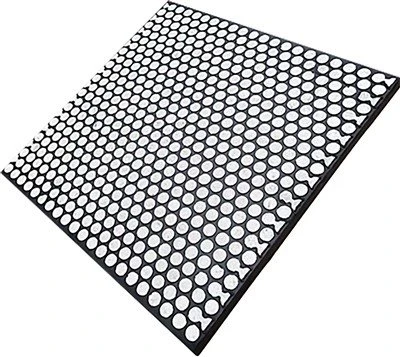
First off, what is Ceramic Pulley Lagging? Well, it's a type of material used to cover conveyor pulleys. It consists of ceramic tiles or segments that are bonded to the pulley surface. You can find more info about it on this link: Ceramic Pulley Lagging.
Now, high - pressure environments can be a real challenge for any material. Whether it's in a mining operation where the conveyor systems are moving tons of heavy ore, or in a large - scale manufacturing plant where there's a continuous flow of heavy products, the pulleys are under a lot of stress.
One of the key advantages of Ceramic Pulley Lagging in high - pressure situations is its incredible abrasion resistance. The ceramic tiles are extremely hard. In fact, they're much harder than traditional rubber lagging. This means that even when there's a high - pressure load causing the conveyor belt to rub against the pulley with great force, the ceramic lagging won't wear down easily. For example, in a coal mining operation, the coal can be quite abrasive. With regular rubber lagging, the surface would start to show signs of wear after just a few weeks. But with ceramic pulley lagging, it can last for months or even years under the same conditions.
Another aspect is its coefficient of friction. In high - pressure environments, it's crucial for the pulley to have a good grip on the conveyor belt. The ceramic surface of the lagging provides a high coefficient of friction. This ensures that the belt doesn't slip on the pulley, even when there's a heavy load. Think about it like trying to hold a heavy box. If your hands are slippery, it's going to be really hard to keep a hold of it. But if your hands have a good grip, you can carry it without any problems. Similarly, the high friction of ceramic pulley lagging helps the conveyor system to operate smoothly, even under high - pressure loads.
Thermal resistance is also a big plus. High - pressure environments often generate a lot of heat. For instance, in a steel manufacturing plant, the conveyor systems are exposed to high temperatures due to the hot steel products being transported. Ceramic pulley lagging can withstand these high temperatures without deforming or losing its properties. Unlike rubber lagging, which can start to melt or become brittle at high temperatures, ceramic remains stable. This stability is essential for the long - term performance of the conveyor system.
But it's not just about the material properties. The installation and maintenance of Ceramic Pulley Lagging also play a role in its performance in high - pressure environments. When it comes to installation, it needs to be done correctly. The ceramic tiles should be properly bonded to the pulley surface. Any gaps or unevenness can lead to problems down the line. For example, if there's a small gap between the tiles, the high - pressure load can cause the tiles to shift, which can then damage the entire lagging surface.
Maintenance is also important. Regular inspections should be carried out to check for any signs of damage or wear. If a tile is cracked or chipped, it should be replaced immediately. This helps to prevent further damage and ensures that the lagging continues to perform well in high - pressure situations.
Now, let's compare Ceramic Pulley Lagging with another popular option, Diamond Pulley Lagging. You can learn more about it here: Diamond Pulley Lagging. Diamond Pulley Lagging also has excellent abrasion resistance, but it can be more expensive than Ceramic Pulley Lagging. In some high - pressure environments, the cost - effectiveness of Ceramic Pulley Lagging makes it a more attractive option. However, Diamond Pulley Lagging might be a better choice in extremely harsh conditions where the highest level of abrasion resistance is required.
In conclusion, Ceramic Pulley Lagging performs really well in high - pressure environments. Its abrasion resistance, high coefficient of friction, and thermal stability make it a reliable choice for conveyor systems in various industries. Whether it's in mining, manufacturing, or any other high - pressure application, it can help to improve the efficiency and longevity of the conveyor system.
If you're in the market for Ceramic Pulley Lagging or want to learn more about how it can benefit your high - pressure operations, don't hesitate to reach out. We're here to answer your questions and discuss your specific needs. Let's have a chat and see how we can work together to get the best performance from your conveyor systems.
References
- Industry reports on conveyor system materials
- Case studies on the use of Ceramic Pulley Lagging in high - pressure environments