

Hey there! As a supplier of sidewall conveyor belts, I often get asked if these belts can be used in the cement industry. Well, let's dive right into it and find out!
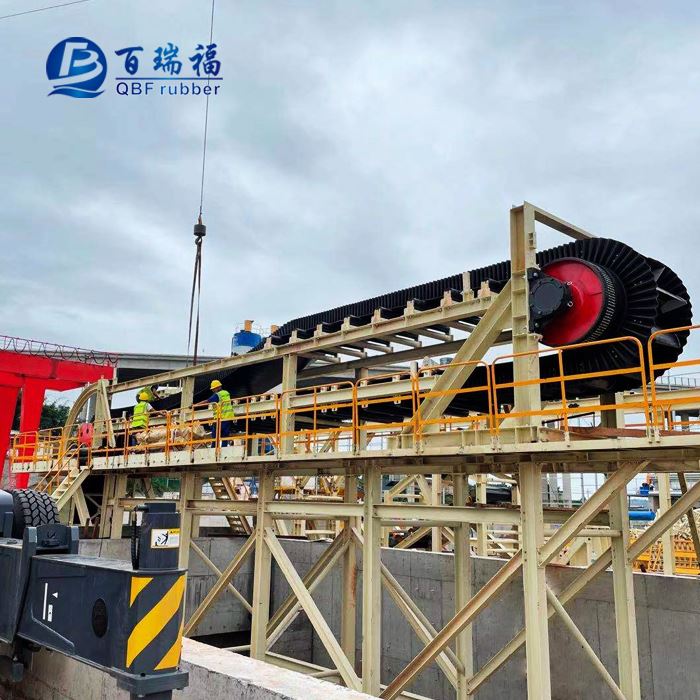
First off, what are sidewall conveyor belts? Sidewall conveyor belts, also known as Sidewall Cleated Belt, are a type of conveyor belt with vertical sidewalls and cleats. The sidewalls prevent materials from spilling off the sides, while the cleats help carry materials up steep inclines. They're designed to handle various materials, including those that are bulky, irregularly shaped, or need to be transported at a high angle.
Now, let's talk about the cement industry. Cement production is a complex process that involves handling different types of materials, such as limestone, clay, gypsum, and cement clinker. These materials are heavy, abrasive, and often need to be transported over long distances and at different elevations.
So, can sidewall conveyor belts be used in this challenging environment? The answer is a resounding yes! Here are some reasons why sidewall conveyor belts are a great fit for the cement industry:
1. High - Angle Conveying
One of the biggest advantages of sidewall conveyor belts is their ability to convey materials at steep angles. In a cement plant, space is often limited, and traditional flat conveyor belts may not be able to transport materials vertically or at a high incline. Sidewall conveyor belts, like the Steep Inclined Conveyor Belt, can handle angles of up to 90 degrees, which means they can save a lot of floor space in the plant. This is especially useful when transporting materials between different levels of the production process, such as from the raw material storage area to the kiln or from the kiln to the cement silos.
2. Preventing Material Spillage
Cement and its raw materials are dusty and can be messy to handle. Spilled materials not only create a safety hazard but also lead to product loss and increased cleanup costs. The sidewalls on sidewall conveyor belts act as a barrier, preventing materials from falling off the sides of the belt. This ensures that the materials are transported efficiently and that the working environment remains clean and safe.
3. Handling Abrasive Materials
Cement raw materials, especially limestone and clinker, are highly abrasive. Regular conveyor belts can wear out quickly when exposed to these materials, leading to frequent replacements and increased maintenance costs. Sidewall conveyor belts are designed to withstand abrasion. They are made from high - quality rubber compounds and reinforced with strong fabrics that can resist the wear and tear caused by abrasive materials. This means they have a longer service life compared to standard conveyor belts, reducing the overall cost of operation in the cement plant.
4. Versatility
Sidewall conveyor belts can be customized to meet the specific needs of a cement plant. They come in different widths, lengths, and cleat heights, allowing them to handle various material volumes and flow rates. Whether you need to transport small amounts of additives or large quantities of raw materials, there's a sidewall conveyor belt that can do the job.
5. Anti - Stick Properties
In a cement plant, materials can sometimes stick to the conveyor belt, causing blockages and reducing the efficiency of the conveyor system. Our Anti - stick Sidewall Conveyor Belt is designed with special anti - stick surfaces that prevent materials from adhering to the belt. This ensures smooth material flow and reduces the need for manual cleaning and maintenance.
However, like any piece of equipment, there are a few things to consider when using sidewall conveyor belts in the cement industry:
1. Temperature Resistance
Cement production involves high - temperature processes, especially in the kiln area. The conveyor belts need to be able to withstand these high temperatures without losing their physical properties. Make sure to choose a sidewall conveyor belt that is rated for the temperature range in your cement plant.
2. Belt Tension and Tracking
Proper belt tension and tracking are crucial for the efficient operation of sidewall conveyor belts. In a cement plant, the heavy and abrasive materials can put extra stress on the belt, causing it to stretch or misalign. Regular maintenance and monitoring of the belt tension and tracking are necessary to prevent issues such as belt slippage and premature wear.
3. Cleaning and Maintenance
Even though sidewall conveyor belts are designed to be self - cleaning to some extent, they still require regular maintenance. This includes cleaning the belt to remove any accumulated dust and debris, inspecting the sidewalls and cleats for damage, and checking the belt joints for integrity.
In conclusion, sidewall conveyor belts are an excellent choice for the cement industry. They offer many benefits, including high - angle conveying, prevention of material spillage, resistance to abrasion, versatility, and anti - stick properties. If you're in the cement industry and looking for a reliable and efficient conveyor solution, sidewall conveyor belts are definitely worth considering.

If you're interested in learning more about our sidewall conveyor belts or have any questions about how they can be used in your cement plant, don't hesitate to reach out. We're here to help you find the perfect conveyor belt solution for your specific needs. Let's start a conversation and see how we can improve your cement production process together!
References
- "Conveyor Belt Technology Handbook"
- Industry reports on cement production and conveyor systems


