

As a supplier of Pipe Conveyor Belts, I often encounter inquiries from clients working in various industries, including those with explosive environments. The question of whether a pipe conveyor belt can be safely used in such settings is crucial, not only for the operational efficiency but also for the safety of workers and the protection of assets. In this blog post, I will delve into the technical aspects, safety considerations, and potential applications of pipe conveyor belts in explosive environments.
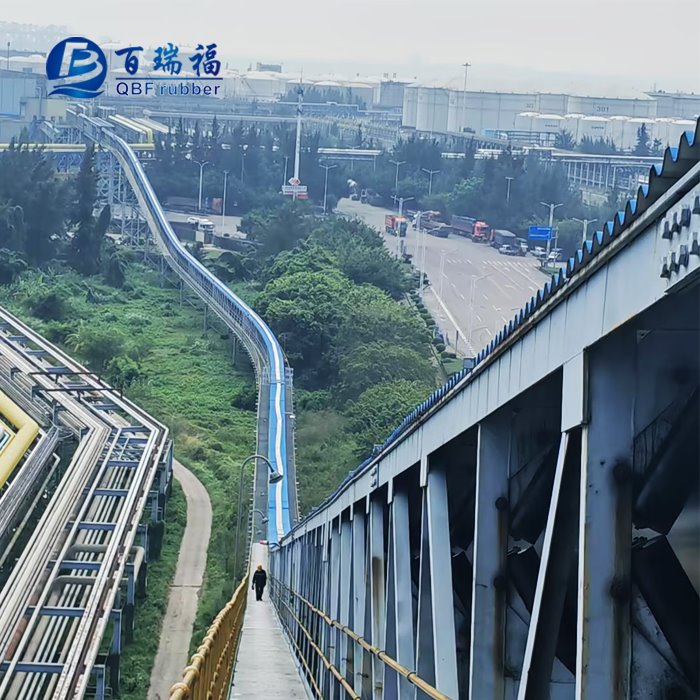
Understanding Pipe Conveyor Belts
Before discussing their use in explosive environments, it's essential to understand what pipe conveyor belts are. A Tube Conveyor Belt is a specialized type of conveyor belt that forms a closed tube around the material being transported. This design offers several advantages over traditional flat belts, such as reduced spillage, lower dust emissions, and the ability to navigate complex routes with tight curves and inclines.
The pipe conveyor belt consists of a belt that is formed into a tube by a series of idlers. The material is loaded at one end and conveyed through the tube to the discharge point. The closed design of the pipe conveyor belt provides a more controlled environment for material handling, which is particularly beneficial in industries where dust and spillage can be a concern.
Explosive Environments: A Brief Overview
Explosive environments are areas where there is a risk of an explosion due to the presence of flammable gases, vapors, dusts, or fibers. These environments are commonly found in industries such as mining, chemical processing, oil and gas, and food processing. To ensure the safety of workers and equipment in these areas, strict regulations and standards have been established.
The classification of explosive environments is based on the likelihood of the presence of an explosive atmosphere and the type of flammable substance involved. In general, explosive environments are classified into zones, with Zone 0 being the most hazardous and Zone 2 being the least hazardous. The selection of equipment for use in these zones must comply with specific safety requirements to prevent the ignition of the explosive atmosphere.
Technical Considerations for Using Pipe Conveyor Belts in Explosive Environments
Material Selection
The materials used in the construction of pipe conveyor belts play a crucial role in their suitability for use in explosive environments. The belt itself must be made from materials that are resistant to static electricity, as static charges can generate sparks that may ignite flammable substances. Conductive rubber compounds are commonly used in the manufacturing of belts for explosive environments, as they can dissipate static charges safely.
In addition to the belt material, the idlers and other components of the conveyor system must also be selected carefully. Non-sparking materials, such as stainless steel or brass, should be used for components that may come into contact with the belt or the material being transported. This helps to prevent the generation of sparks that could potentially ignite the explosive atmosphere.
Electrical Safety
Electrical equipment is a common source of ignition in explosive environments. Therefore, all electrical components of the pipe conveyor belt system, such as motors, controls, and sensors, must be designed and installed in accordance with strict safety standards. Intrinsically safe electrical equipment, which is designed to limit the energy available for ignition, is typically used in explosive environments.
In addition to using intrinsically safe equipment, proper grounding and bonding of the conveyor system are essential to prevent the build-up of static electricity. All metal components of the system should be connected to a common ground to ensure that any static charges are safely dissipated.
Dust and Spillage Control
One of the key advantages of pipe conveyor belts is their ability to reduce dust and spillage. In explosive environments, this is particularly important, as dust and spillage can increase the risk of an explosion. The closed design of the pipe conveyor belt helps to contain the material being transported, reducing the amount of dust that is released into the atmosphere.
However, it is still important to ensure that the conveyor system is properly maintained to prevent dust and spillage. Regular cleaning of the belt and the conveyor housing, as well as proper sealing of joints and connections, can help to minimize the risk of dust accumulation.
Safety Standards and Regulations
The use of pipe conveyor belts in explosive environments is subject to strict safety standards and regulations. These standards are designed to ensure the safety of workers and equipment and to prevent the occurrence of explosions. In the United States, the National Fire Protection Association (NFPA) and the Occupational Safety and Health Administration (OSHA) have established regulations for the use of equipment in explosive environments.
In Europe, the ATEX directive sets out the requirements for equipment and protective systems intended for use in potentially explosive atmospheres. Any pipe conveyor belt system used in an explosive environment in Europe must comply with the ATEX directive to ensure its safety and compliance.
Potential Applications
Despite the challenges associated with using pipe conveyor belts in explosive environments, there are several potential applications where they can provide significant benefits. In the mining industry, for example, pipe conveyor belts can be used to transport coal, ore, and other materials in underground mines, where there is a risk of methane gas explosions. The closed design of the pipe conveyor belt helps to reduce the release of dust and methane gas, improving the safety of the mining operation.
In the chemical processing industry, pipe conveyor belts can be used to transport hazardous chemicals and powders. The closed design of the conveyor belt helps to prevent the leakage of these substances, reducing the risk of environmental contamination and explosions.
Conclusion
In conclusion, a pipe conveyor belt can be used in explosive environments, provided that the appropriate technical and safety measures are taken. The selection of suitable materials, the use of intrinsically safe electrical equipment, and the implementation of proper dust and spillage control measures are essential to ensure the safe operation of the conveyor system.
As a supplier of Pipe Conveyor Belts, we have extensive experience in providing conveyor solutions for explosive environments. Our products are designed and manufactured to meet the highest safety standards and are backed by our commitment to quality and customer service. If you are considering using a pipe conveyor belt in an explosive environment, we encourage you to contact us to discuss your specific requirements. Our team of experts will be happy to provide you with more information and help you select the right conveyor system for your application.
References
- National Fire Protection Association (NFPA). (2023). NFPA 70: National Electrical Code.
- Occupational Safety and Health Administration (OSHA). (2023). 29 CFR 1910.106: Flammable and Combustible Liquids.
- European Union. (2014). Directive 2014/34/EU (ATEX Directive) on the harmonization of the laws of the Member States relating to equipment and protective systems intended for use in potentially explosive atmospheres.


