


The Sidewall Conveyor Belt is widely used in bulk material handling systems where space is limited and steep or vertical conveying is required. Compared with standard conveyor belts, it offers significantly higher incline capability and system flexibility, making it a preferred solution for mining, construction, ports, agriculture, and industrial processing industries.
For B2B buyers, selecting the right Sidewall Conveyor Belt is not only about specifications-it directly impacts conveying efficiency, system stability, and long-term maintenance cost.
1. What Is a Sidewall Conveyor Belt?
A Sidewall Conveyor Belt is a specialized conveyor belt designed with corrugated sidewalls and cleats (cross bars) to prevent material spillage during steep incline or vertical transportation.
Key Structure:
- Corrugated sidewalls (prevents material falling)
- Cleats (support material lifting)
- Base belt (rubber or reinforced fabric structure)
- High-tension reinforcement layers
This structure allows materials to be transported at steep angles, even up to vertical lifting in certain systems.

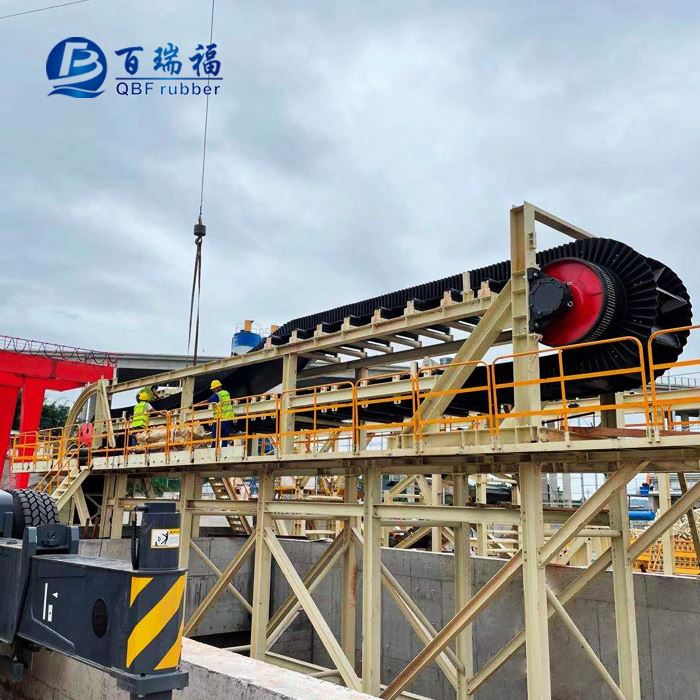
2. Why Sidewall Conveyor Belt Is Widely Used in Industry
Traditional flat belts are limited by angle and space. A Sidewall Conveyor Belt solves these limitations by enabling:
- Steep incline conveying (up to 90° in vertical systems)
- Space-saving conveyor layouts
- Reduced transfer points (lower spillage risk)
- Higher system efficiency in compact plants
👉 This makes it ideal for industries where plant layout optimization is critical.
3. Advantages of Sidewall Conveyor Belt
High Incline Capability
The sidewall and cleat structure prevents material rollback, enabling steep or vertical transport.
Reduced Material Spillage
Enclosed transport design significantly reduces leakage and waste.
Space Optimization
Eliminates the need for long horizontal conveyors, saving plant space.
Lower Transfer Costs
Fewer transfer points reduce dust, maintenance, and system complexity.
Customizable Design
Sidewall height, cleat spacing, and belt width can be customized based on material type and capacity requirements.
4. Common Applications of Sidewall Conveyor Belt
A Sidewall Conveyor Belt is widely used in heavy-duty and bulk material industries:
- Mining and mineral processing
- Cement and construction materials
- Port and bulk cargo handling
- Agricultural bulk transport (grain, fertilizer)
- Power plant ash handling systems
- Recycling and waste management systems
- Chemical and raw material processing
5. Material Selection for Sidewall Conveyor Belt
Choosing the correct material is essential for performance and durability.
Rubber Sidewall Conveyor Belt
- High abrasion resistance
- Suitable for heavy-duty applications
- Excellent impact resistance
- Ideal for mining and cement industries
PVC/PU Sidewall Conveyor Belt (light-duty systems)
- Lightweight structure
- Suitable for light industrial applications
- Better for controlled environments
- Limited load capacity compared to rubber
👉 In most industrial applications, rubber-based Sidewall Conveyor Belt is the preferred solution due to durability and load performance.
6. Key Technical Parameters Buyers Should Consider
When selecting a Sidewall Conveyor Belt, B2B buyers should evaluate:
- Sidewall height (mm)
- Cleat height and spacing
- Belt width and thickness
- Tensile strength
- Working angle (incline capability)
- Temperature resistance range
- Material type (rubber/PVC/PU)
- Load capacity (tons/hour)
Proper specification matching ensures system stability and prevents premature failure.
7. Sidewall Conveyor Belt vs Standard Conveyor Belt
| Feature | Sidewall Conveyor Belt | Standard Conveyor Belt |
|---|---|---|
| Incline capability | High (up to vertical) | Low to medium |
| Material spillage | Minimal | Higher risk |
| Space requirement | Compact system | Longer layout needed |
| Application | Bulk/industrial | General transport |
| Cost | Higher initial | Lower initial |
👉 Sidewall Conveyor Belt is a strategic upgrade for space-limited or high-capacity conveying systems.
8. Custom Sidewall Conveyor Belt Solutions
Industrial systems often require non-standard configurations. Customization options include:
- Sidewall height adjustment
- Cleat design optimization
- Reinforcement layer selection
- Heat/oil/chemical resistant formulations
- Conveyor width and length customization
OEM customization ensures the belt matches real operating conditions instead of standard assumptions.
9. Why Choose Us as Your Sidewall Conveyor Belt Manufacturer
We specialize in manufacturing high-performance industrial conveyor solutions, including Sidewall Conveyor Belt systems designed for demanding applications.
Our capabilities include:
- OEM and custom engineering support
- Heavy-duty rubber conveyor belt production
- Material-specific design (abrasion/heat/oil resistance)
- Stable mass production for global supply
- Technical consultation for system design optimization
Learn more about our company and manufacturing capability here: QBFRubber About Us
We work closely with global industrial clients to improve conveying efficiency, reduce downtime, and optimize total system cost.
10. FAQ for B2B Buyers
Q1: What is the maximum incline of a Sidewall Conveyor Belt?
Depending on design, it can reach up to 90° for vertical conveying systems.
Q2: Can Sidewall Conveyor Belt handle heavy materials?
Yes. Rubber-based systems are specifically designed for heavy bulk materials such as ore, cement, and aggregates.
Q3: Is Sidewall Conveyor Belt customizable?
Yes. Sidewall height, cleat design, and belt material can all be customized.
Q4: What industries benefit most from Sidewall Conveyor Belt?
Mining, cement, port logistics, agriculture, and recycling industries.
11. Request a Quote for Sidewall Conveyor Belt
If you are planning a new conveying system or upgrading an existing line, selecting the right Sidewall Conveyor Belt is critical for long-term efficiency and stability.
👉 Contact us today to get a professional solution and competitive quotation for your Sidewall Conveyor Belt project.
Upgrade your material handling system with a high-performance Sidewall Conveyor Belt engineered for space efficiency, durability, and industrial reliability.


