



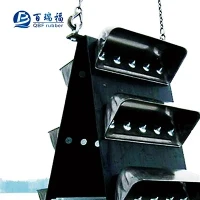
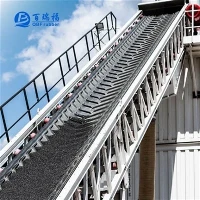

Conveyor Belt Base Belt
Strength (N/mm): 250+6000
Cover Thickness (mm): 2:2,4;2,8:8
Weight (Kg/m2): 8.60-59.60
Min. Pulley Dia. (mm): 315-1800
Qingdao Best Friend Rubber & Plastic Co., Ltd. is one of the most reliable manufacturers and suppliers of conveyor belt base belt in China, also supports customized service. If you're going to buy high quality conveyor belt base belt made in China, welcome to get more information from our factory.
Conveyor belt base belts play a crucial role in facilitating the movement of materials in various industries. They are essential components of steep inclined and vertical systems, making it possible to transport materials efficiently and safely. The cross rigid base belt is a critical element of sidewall belts, and it ensures that the belt maintains its shape and structure during operation.

To meet the demands of different applications, conveyor belt base belts must have high tensile strength and abrasion resistance. They should be durable, tough, and able to withstand extreme conditions, such as high temperatures, moisture, and chemicals. With the help of specially designed base belts with cross rigidity, the problem of belt deformation is now a thing of the past.
Conveyor belt base belts are subject to international standards, ensuring that they meet the required quality and safety standards. This ensures that customers can rely on conveyor belts to handle all kinds of materials, from the lightest to the heaviest.


QXE
Light duty application only and the QXE belt incorporates the transverse polyester monofilament cords within the fabric.
QXE+2
Medium and heavy duty application and the QXE +2 cross rigid and tensioning plies are separate, in this case the belt has 2 cross-rigid polyester monofilament plies.
QXE-SC+2
Heavy duty application and the QXE-SC+2 belt incorporates textile tensioning plies with Bekaert steel breaker. The high transverse stiffness means the belt can be used in application areas where rigidity is a crucial factor, i.e. High lift heights and wide belts.
QXST-SC*
Extreme heavy duty application and the QCXST-SC belt incorporates steel cord tensioning with Bekaert steel breaker. High tensile strengths can be achieved making the belt ideal for high vertical lift applications.

Conveyor Belt Base Belt Structure
Cover Rubber
The conveyor belt's top layer usually is made of natural or synthetic rubber, and is called cover rubber which protects the carcass. It has abrasion, temperature, petroleum, chemical, static and fire-resistant characteristics and depends on the working conditions.The top cover of the rubber conveyor belt can be modified depending on the requirements and be Abrasion Resistant, Cut Resistant, Heat, Oil, Cold Resistant, Flame Resistant, or offerEnergy Saving Compounds.
Carcass
Maintains the tension of the rubber conveyor belts and supports the transported products. The carcass of the rubber conveyor belt usually is made of excellent bonded rubber using coated cloth, nylon, polyester, steel wire or aramid. Carcass can be made of Steel Cord, NN (Nylon-Nylon), EP (Poliester-Nylon), SW (Straight Warp), Aramid fibers or other materials
Adhesive Rubber
Maintains the adhesive power between all layers of carcass and the cover rubber and keeps their durable flexibility and tension.
Reinforced Cover
It is used to protect the carcass in case that the products are larger or a tear occurs because significantly shaken in worse working conditions than specified, putting excess load on the top cover and carcass.
Conveyor Belt Base Belt Materials
Thermoplastics
Thermoplastic conveyor belts are made with a thermoplastic polymer. Because thermoplastic conveyor belts are flexible and constructed with hygiene in mind, they are ideal for several industries, including food handling, textile production and heavy-duty metal transfers. Thermoplastic belts are also lightweight. According to The National Industrial Belting Association, to be defined as a lightweight conveyor belt, it must have a working tension of fewer than 160 pounds per inch of width.The two most common types of thermoplastic conveyor belts are polyurethane (PU) belts and polyvinyl chloride (PVC) belts.
- PU conveyor belts: PU conveyor belts are constructed using FDA-approved materials, making them ideal for food production. They can withstand both extremely low and extremely high temperatures without melting or warping. PU conveyor belts are also easy to clean.
- PVC conveyor belts: These conveyor belts are typically flame-resistant and can withstand similar temperatures as PU conveyor belts. PVC belts can handle contact with chemicals. They are known for being durable. PVC belts are often corrugated for maximum grip.
Metal
Metal conveyor belts are strong and very durable, making them ideal for almost every industry - especially industries that deal with raw products, like food service or unpackaged goods. In addition to their durability, these belts are flat and easy to work on. They are also rigid, meaning you do not have to worry about the belt changing shape over time. However, for this same reason, they are not as easy to shape or bend, so possible conveyor paths are limited. Metal conveyor belts are usually made from either aluminum or shaped stainless or carbon steel.
Rubber
If you have spent much time in an airport, you have probably seen rubber conveyor belts in action. They are popular in settings like this, as well as in mining. Rubber conveyor belt material is praised for its flexibility as well as its smooth and seamless design. They are also among the most affordable conveyor belt options. However, their tolerance to heat and wear-and-tear are much lower than other conveyor belt materials. They are also more challenging to keep clean.
Fabric
Fabric conveyor belts are usually medium-impact and cost-effective. They are often used to transport gravel, sand or other bulk materials. Most grocery stores use fabric-based conveyor belts in their check-out lines.
- Nylon: Nylon is highly durable, resistant to high heat, and can withstand heavy impact. It also adheres well to rubber in the case of a hybrid conveyor belt. It is also less prone to mildew than other fabrics.
- Polyester: Polyester is another synthetic material used for conveyor belts. It has many of the same benefits as nylon, but is typically less expensive and quieter during operation.
- Kevlar: Kevlar is the superstar of heavy-duty conveying. It's made to withstand flame and substantial impact. It is bulky and made from thicker fibers than most other fabric belts. Some reports say that kevlar belts also run faster and longer than their counterparts.
- Natural fabrics: Natural fabrics are woven to be breathable and include cotton and wool.
Leather
Many early models of conveyor belts were made of leather due to its durability and accessibility. Leather is also shock-resistant and has a good grip. Today, leather is often used as one part of a hybrid or customized conveyor belt.
What are Conveyor Belts Used for in Industries Today?
Construction
Conveyor belts can aid in carrying heavy raw materials, such as; cement, bricks and sand to a different part of a construction site.
Warehouse Packing
Conveyor belts speed up the product packaging process dramatically, especially when in a warehouse that is dealing with a large number of orders. Dependent on the conveyor belt, they are able to transport packages of different shapes, sizes and weights into the posting department to be shipped.
Letter & Parcel Sorting
It's no secret that letter and parcel sorting is considered a complex task to get right. This is why specially constructed belts are vital in the postal sector, in order to stay efficient and keep a reliable reputation throughout the postal feeding process.
Airports
One of the fundamental aspects of an airport process is the checking in and baggage claim section. A baggage conveyor belt system offers a reliable and low energy consumption alternative to transporting the customers highly regarded goods, creating a trusting relationship.
Pharmaceuticals
Within the pharmaceutical sector, a huge amount of precision is needed to aid in minimising cross-contamination between medical batches. This sectors conveyor system is needed to adequately sort and process the products in a sanitary and productive manner.
Hot Tags: conveyor belt base belt, China conveyor belt base belt manufacturers, suppliers, factory, conveyor belt conveyor accessories protection, conveyor belt conveyor low speed, conveyor belt conveyor accessories corrosion resistant, conveyor belt conveyor repair services, conveyor belt conveyor accessories rigid, conveyor belt conveyor accessories warehousing
Previous
Ceramic Wear LiningYou Might Also Like




Send Inquiry