Hey there! As a supplier of Chevron Belts, I often get asked about the minimum pulley diameter for these belts. It's a crucial question because getting it wrong can lead to all sorts of problems, like reduced belt life, poor performance, and even safety issues. So, let's dive right in and explore what the minimum pulley diameter for a Chevron Belt should be.
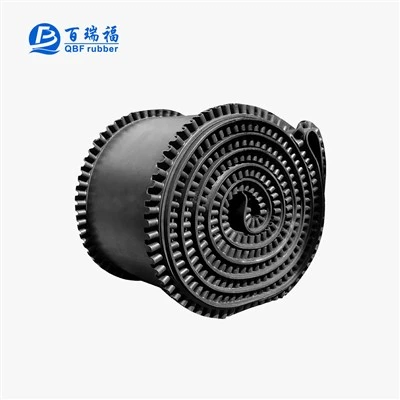
First off, what exactly is a Chevron Belt? Well, a Chevron Belt is a type of conveyor belt that has a unique chevron-shaped pattern on its surface. This pattern helps to prevent materials from slipping off the belt, especially when conveying at an incline. It's commonly used in industries like mining, agriculture, and manufacturing, where there's a need to move bulk materials efficiently.
Now, let's talk about pulleys. Pulleys are an essential part of any conveyor system. They guide the belt, provide tension, and help transfer power from the motor to the belt. The diameter of the pulley plays a significant role in how the belt performs. If the pulley diameter is too small, the belt has to bend more sharply, which can cause excessive stress on the belt's carcass and cover. This can lead to premature wear and tear, cracking, and even delamination.
So, what's the minimum pulley diameter for a Chevron Belt? Well, it depends on several factors, including the belt's construction, thickness, and the type of application. Generally speaking, the minimum pulley diameter is determined by the belt's flexibility and the amount of stress it can withstand.
For most standard Chevron Belts, the minimum pulley diameter is typically around 80 to 100 times the belt's thickness. For example, if you have a belt that's 6 mm thick, the minimum pulley diameter would be around 480 to 600 mm. However, this is just a general guideline, and the actual minimum pulley diameter may vary depending on the specific belt and application.
Some manufacturers may provide more specific recommendations based on their belt's design and performance characteristics. It's always a good idea to consult the belt manufacturer's technical data sheet or contact their customer support team for the most accurate information.
In addition to the belt's thickness, other factors that can affect the minimum pulley diameter include the belt's carcass material, the type of cover, and the operating conditions. For example, belts with a more rigid carcass or a thicker cover may require a larger minimum pulley diameter to prevent excessive stress.
Operating conditions such as temperature, humidity, and the presence of abrasive materials can also impact the belt's performance and the minimum pulley diameter. In harsh environments, the belt may be more prone to wear and tear, so a larger pulley diameter may be necessary to ensure its longevity.
Another important consideration is the type of pulley. There are different types of pulleys, including drive pulleys, idler pulleys, and bend pulleys. Each type of pulley may have different requirements for the minimum pulley diameter. For example, drive pulleys, which are responsible for transmitting power to the belt, may require a larger diameter to ensure efficient power transfer and prevent slippage.
Idler pulleys, on the other hand, are used to support the belt and keep it in alignment. They generally have a smaller minimum pulley diameter compared to drive pulleys. Bend pulleys are used to change the direction of the belt and may also have specific requirements for the minimum pulley diameter based on the angle of the bend.
To determine the minimum pulley diameter for a specific application, it's important to consider all these factors and work closely with the belt manufacturer or a conveyor system engineer. They can help you select the right belt and pulleys based on your specific requirements and ensure that your conveyor system operates efficiently and safely.
As a Chevron Belt supplier, I've seen firsthand the importance of getting the minimum pulley diameter right. By using the correct pulley diameter, you can extend the life of your belt, reduce maintenance costs, and improve the overall performance of your conveyor system.

If you're in the market for a Chevron Belt or have any questions about the minimum pulley diameter, don't hesitate to reach out. We're here to help you find the right solution for your needs. Whether you're a small business or a large industrial operation, we have the expertise and experience to provide you with high-quality Chevron Belts and excellent customer service.
So, if you're looking for a reliable Chevron Belt supplier, give us a call or send us an email. Let's start a conversation and see how we can help you improve your conveyor system.
References:
- Conveyor Belt Manufacturer's Technical Data Sheets
- Conveyor System Engineering Manuals